




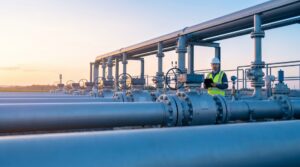
For process engineers and instrumentation specialists at industrial facilities across Quebec, selecting the right flow meter is one of the most consequential decisions in any instrumentation project. Flow measurement touches nearly every process, from steam and gas distribution to liquid chemical dosing, wastewater discharge monitoring, and custody transfer of hydrocarbons. Get the technology selection wrong, and the consequences range from chronic measurement drift and excessive maintenance to failed regulatory audits and costly mid-project replacements.
With more than a dozen flow measurement technologies available on the market, each with distinct strengths, limitations, and optimal applications, the challenge is not finding a flow meter. It is finding the right one for your specific fluid, process conditions, pipe size, and accuracy requirements. This guide walks through the most widely used industrial flow meter technologies, the key selection criteria that separate good choices from costly mistakes, and what to look for when choosing an industrial flow meter supplier in Quebec with the application engineering expertise to get it right the first time.
What Is an Industrial Flow Meter?
An industrial flow meter is a measurement instrument used to quantify the volumetric or mass flow rate of a liquid, gas, or steam moving through a pipe or open channel. In process industries, flow measurement is critical for process control, material balance, regulatory compliance, energy management, and custody transfer. The accuracy, reliability, and maintenance requirements of a flow meter vary significantly depending on the measurement technology, and no single technology is optimal for all applications.
The Most Common Industrial Flow Meter Technologies
Understanding the strengths and limitations of each technology is the essential first step in selecting the right instrument for your application.
Magnetic flow meters (also called electromagnetic or mag flow meters) measure the flow of electrically conductive liquids using Faraday’s law of electromagnetic induction. They have no moving parts, create no pressure drop, and are highly accurate across a wide flow range. A magnetic flow meter in Quebec is the standard choice for water and wastewater applications, chemical dosing, pulp and paper slurries, and any conductive liquid application where low maintenance and long service life are priorities. CTH distributes the Foxboro 9100 and 9200A series magnetic flow meters, which are available in flange sizes from DN 25 to DN 2000 mm with a range of liner materials including neoprene, EPDM, PTFE, and ebonite for compatibility with aggressive process fluids.
Coriolis flow meters measure mass flow directly by detecting the Coriolis force induced by fluid moving through a vibrating tube. They are the most accurate flow measurement technology available, capable of measuring mass flow, volumetric flow, density, and temperature simultaneously from a single instrument. A Coriolis flow meter in Canada is the preferred choice for custody transfer, chemical batching, high-value fluid measurement, and any application where mass flow accuracy is critical. CTH distributes the Foxboro CFT50 Coriolis flow meter, which offers extreme precision in sizes from DN 3 to DN 80 mm and can operate with an empty tube at startup, a critical advantage for batch processes.
Vortex flow meters measure flow by detecting the frequency of vortices shed by a bluff body inserted in the flow stream. They are well-suited for steam, gas, and liquid applications where a robust, low-maintenance instrument is needed. The Foxboro vortex flow meter is available in flange and sandwich mounting configurations from DN 15 to DN 300 mm, with a rangeability of 80:1 and the ability to replace the sensor without recalibration, a significant advantage for facilities with limited downtime windows.
Ultrasonic flow meters measure flow using transit-time or Doppler technology and are available in both clamp-on (non-invasive) and inline configurations. They are ideal for large-diameter pipes, custody transfer of hydrocarbons, and applications where process penetration is not possible. Cameron’s ultrasonic flow meters, available through CTH, are Weights and Measures Canada approved for hydrocarbon pipeline custody transfer and provide multi-path measurement for the highest accuracy in pipeline applications.
Differential pressure (DP) flow meters, including orifice plates, cone meters, and pitot tubes, remain widely used in steam and gas applications due to their simplicity, low cost, and compatibility with high-temperature, high-pressure process conditions. Cameron’s cone flow meter (DP type) is available through CTH for liquid and gas applications requiring a compact, low-maintenance DP measurement solution.
How to Select the Right Flow Meter Technology
Matching the technology to the application requires a systematic evaluation of the following key criteria.
| Selection Criterion | Key Questions to Ask |
| Fluid type | Is the fluid conductive, clean, viscous, corrosive, or multiphase? |
| Measurement type | Is volumetric flow, mass flow, or both required? |
| Accuracy requirement | Is this for process control, regulatory reporting, or custody transfer? |
| Pipe size and material | What is the nominal pipe diameter and flange standard? |
| Process conditions | What are the operating temperature, pressure, and flow velocity ranges? |
| Installation constraints | Are straight pipe run requirements achievable? Is a non-invasive option needed? |
| Maintenance access | How frequently can the instrument be taken offline for maintenance? |
| Hazardous area classification | Is the installation in a classified area requiring explosion-proof certification? |
For most water and wastewater applications, a magnetic flow meter is the optimal choice. For steam and gas measurement, a vortex or DP meter is typically preferred. For high-accuracy liquid measurement or custody transfer, a Coriolis or ultrasonic meter is the right technology. For large-diameter hydrocarbon pipelines, a Cameron ultrasonic meter with Weights and Measures Canada approval is the standard.
Why Technology Selection Expertise Matters More Than Price
The purchase price of a flow meter represents only a fraction of its total cost of ownership. A meter that is mis-specified for the application, whether due to incorrect liner material selection, inadequate straight pipe run, or a technology mismatch with the fluid, will generate ongoing costs in recalibration, maintenance, replacement parts, and process downtime that far exceed any initial savings.
This is why the most important factor when choosing where to buy a process flow meter in Quebec is not the price of the instrument, it is the application engineering expertise of the supplier. A qualified industrial flow meter supplier in Quebec will assess your process conditions, recommend the right technology and model, verify the installation requirements, and provide the technical support needed to commission the instrument correctly and keep it operating accurately over its full service life.
Why CTH Industrial Controls Is Quebec’s Trusted Flow Meter Supplier
CTH Industrial Controls has been supplying and supporting industrial flow meters in Quebec, Ontario, and the Maritimes for over 50 years. As an authorized distributor for Foxboro (Schneider Electric), Cameron, and SOR, CTH offers one of the broadest flow measurement portfolios available from a single supplier in Eastern Canada, covering magnetic, Coriolis, vortex, ultrasonic, DP cone, and turbine technologies in a single source.
More importantly, CTH brings the application engineering expertise to match the right technology to your specific process. Whether you are replacing an aging mag meter in a pulp mill, specifying a Coriolis meter for a pharmaceutical batching system, or selecting a Cameron ultrasonic meter for a pipeline custody transfer application, CTH’s technical team will ensure you get the right instrument for the job.
Ready to specify your flow meter? Visit cth.ca/solutions/flow-meter or call 450-671-2181 to speak with a flow measurement specialist.
Frequently Asked Questions
What is the best industrial flow meter for water and wastewater applications in Quebec?
For water and wastewater applications in Quebec, a magnetic flow meter (electromagnetic flow meter) is typically the best choice. Mag meters have no moving parts, create no pressure drop, and are highly accurate across a wide flow range. CTH distributes the Foxboro 9100 series for clean water and the 9200A series for wastewater and slurry applications, available in sizes from DN 25 to DN 2000 mm with multiple liner material options.
What is the difference between a Coriolis flow meter and a magnetic flow meter?
A Coriolis flow meter measures mass flow directly and can simultaneously measure density and temperature, making it the most accurate option for custody transfer and high-value fluid measurement. A magnetic flow meter measures volumetric flow of conductive liquids and is better suited for large-diameter pipes, water and wastewater, and applications where low maintenance and low pressure drop are priorities. CTH can help you determine which technology is right for your specific application.
Who is the best industrial flow meter supplier in Quebec?
CTH Industrial Controls is one of Quebec’s most experienced industrial flow meter suppliers, with over 50 years of application expertise and an authorized distributor relationship with Foxboro, Cameron, and SOR. CTH offers magnetic, Coriolis, vortex, ultrasonic, and DP flow meters, supported by technical application engineering, commissioning assistance, and after-sales service across Quebec, Ontario, and the Maritimes.
Are Cameron ultrasonic flow meters approved for custody transfer in Canada?
Yes. Cameron’s ultrasonic flow meters, available through CTH, are Weights and Measures Canada approved for the custody transfer of hydrocarbons in pipeline applications. They provide multi-path ultrasonic measurement for the highest accuracy in liquid hydrocarbon transfer, and can also measure density to identify different products passing through the pipeline.
How do I choose between a vortex flow meter and a DP flow meter for steam measurement in Quebec?
Both vortex and differential pressure (DP) flow meters are commonly used for steam measurement. Vortex meters offer higher rangeability (up to 80:1), no moving parts, and the ability to replace the sensor without recalibration, making them the preferred choice for most steam applications. DP meters with orifice plates or cone elements are preferred when the process conditions (very high temperature or pressure) exceed the limits of vortex technology, or when a low-cost solution for a non-critical measurement point is acceptable. CTH’s technical team can evaluate your steam conditions and recommend the right technology.