





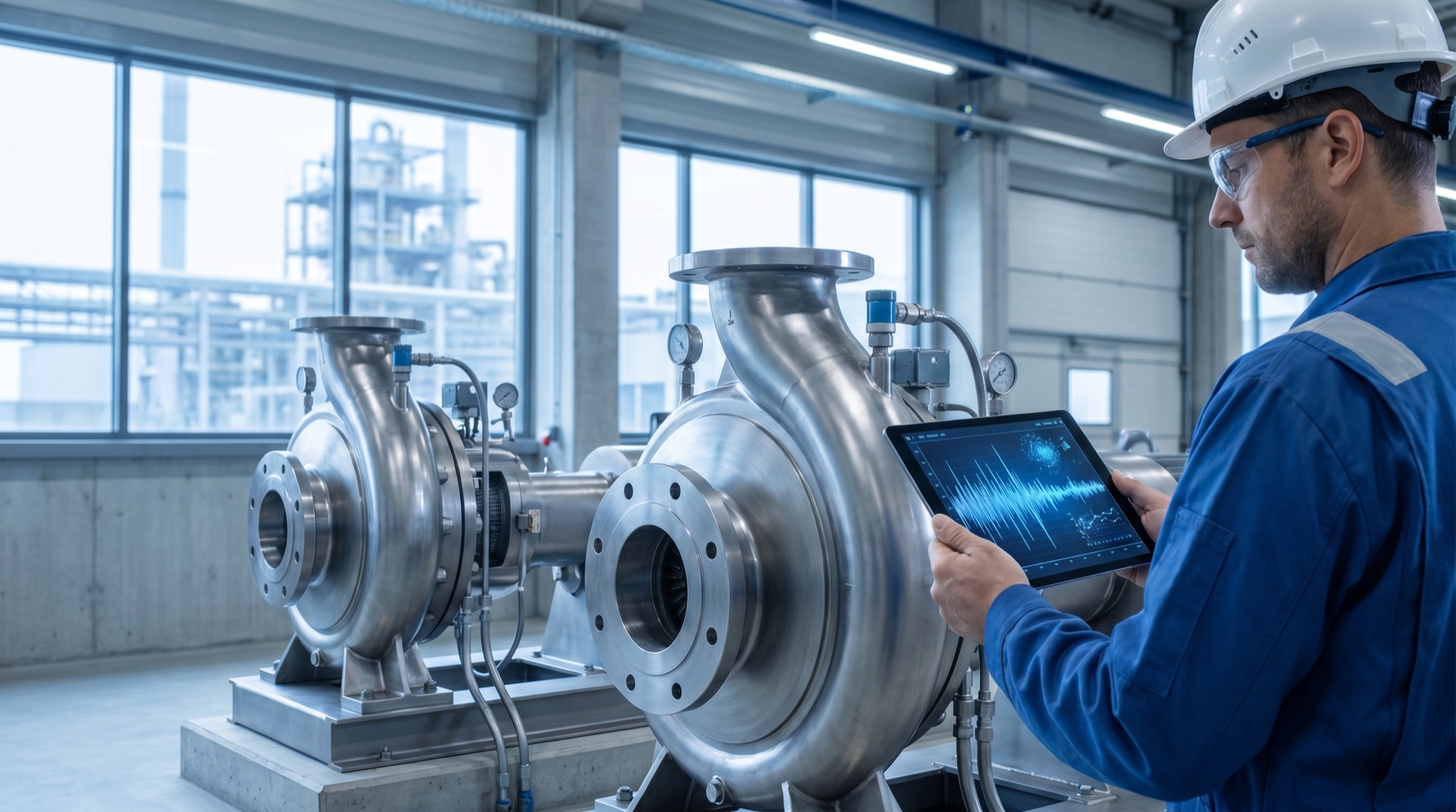
Every hour of unplanned downtime in a mine, refinery, mill or food plant carries a cost measured in lost production, emergency labour and missed shipments. Predictive maintenance turns that equation around. Instead of waiting for equipment to fail, or replacing parts on a fixed calendar whether they need it or not, you monitor the actual condition of rotating machinery and critical processes, and intervene only when the data shows wear developing. Combined with modern process control automation and reliable industrial data recording, predictive maintenance gives reliability engineers and plant managers a continuous, defensible picture of asset health.
This guide from CTH Industrial Controls, a Quebec-based industrial instrumentation supplier serving plants across Canada, walks through the four pillars of a practical condition monitoring and automation program: industrial vibration monitoring with accelerometers, advanced process controllers and paperless recorders, industrial wireless communication for large sites, and industrial weighing and load cell systems. Along the way we link to detailed application guides for each technology.
In this guide:
On this page
- What Is Predictive Maintenance?
- Condition Monitoring Technologies Compared
- Industrial Vibration Monitoring with CTC Accelerometers
- Process Control Automation and Industrial Data Recording
- Wireless Sensor Networks for Large Industrial Sites
- Industrial Weighing and Load Cell Systems
- Building Your Predictive Maintenance Program
- Frequently Asked Questions
What Is Predictive Maintenance?
Maintenance strategies in industry generally fall into three categories, each with a very different cost profile:
- Reactive maintenance: run equipment until it fails, then repair it. Simple, but it converts minor defects into catastrophic failures, secondary damage and unplanned outages at the worst possible time.
- Preventive maintenance: replace components on a fixed schedule based on running hours or calendar time. Better than reactive, but it discards healthy parts and still misses failures that develop between intervals.
- Predictive maintenance: measure the actual condition of the asset (vibration, lubricant quality, temperature, process trends) and schedule work only when measurable degradation appears.
The reason predictive maintenance works is that most failure modes in rotating and process equipment develop gradually. A rolling-element bearing does not fail in an instant; it announces itself weeks or months in advance through changing vibration signatures, rising temperatures and degrading lubricant. A control loop drifting out of tune shows up in recorded process data long before product quality suffers. The job of a condition monitoring program is to capture those early signals reliably, trend them over time, and turn them into planned work orders instead of emergency call-outs.
The approach applies across every sector CTH serves, from grinding mills and slurry pumps in mining, to compressors and pump trains in petrochemical plants, to dryers and stock pumps in pulp and paper mills, to hygienic process lines in food and beverage facilities. You can explore the full range of sectors we support on our industries page.
Condition Monitoring Technologies Compared
No single measurement tells the whole story of machine health. A mature predictive maintenance program layers several complementary technologies, each suited to particular failure modes and asset types. The table below summarizes the four core approaches covered in this guide, with links to our in-depth application articles.
| Technology | What It Detects | Typical Assets | How It Is Deployed |
|---|---|---|---|
| Vibration analysis | Bearing wear, imbalance, misalignment, looseness, cavitation | Pumps, motors, fans, gearboxes, compressors | Walk-around routes with portable analyzers, or permanently mounted accelerometers feeding continuous monitoring systems |
| industrial weighing and load cell systems | Material mass, batch and fill accuracy, vessel inventory | Tanks, silos, hoppers, batching and filling lines | Load cells with weight controllers, indicators or PLC modules |
| Process data recording and control | Loop drift, thermal excursions, process upsets, compliance deviations | Furnaces, ovens, retorts, reactors, batch processes | PID controllers and paperless graphic recorders with secure data archiving |
| Wireless condition monitoring | Extends any of the above to remote or hard-to-cable assets | Tailings ponds, tank farms, well pads, remote pump stations | Battery-powered wireless transmitters, wireless I/O and licensed or unlicensed radio backhaul |
The sections that follow explain each layer in more detail, including the instrumentation CTH supplies to Canadian industry for every one of them.
Industrial Vibration Monitoring with CTC Accelerometers
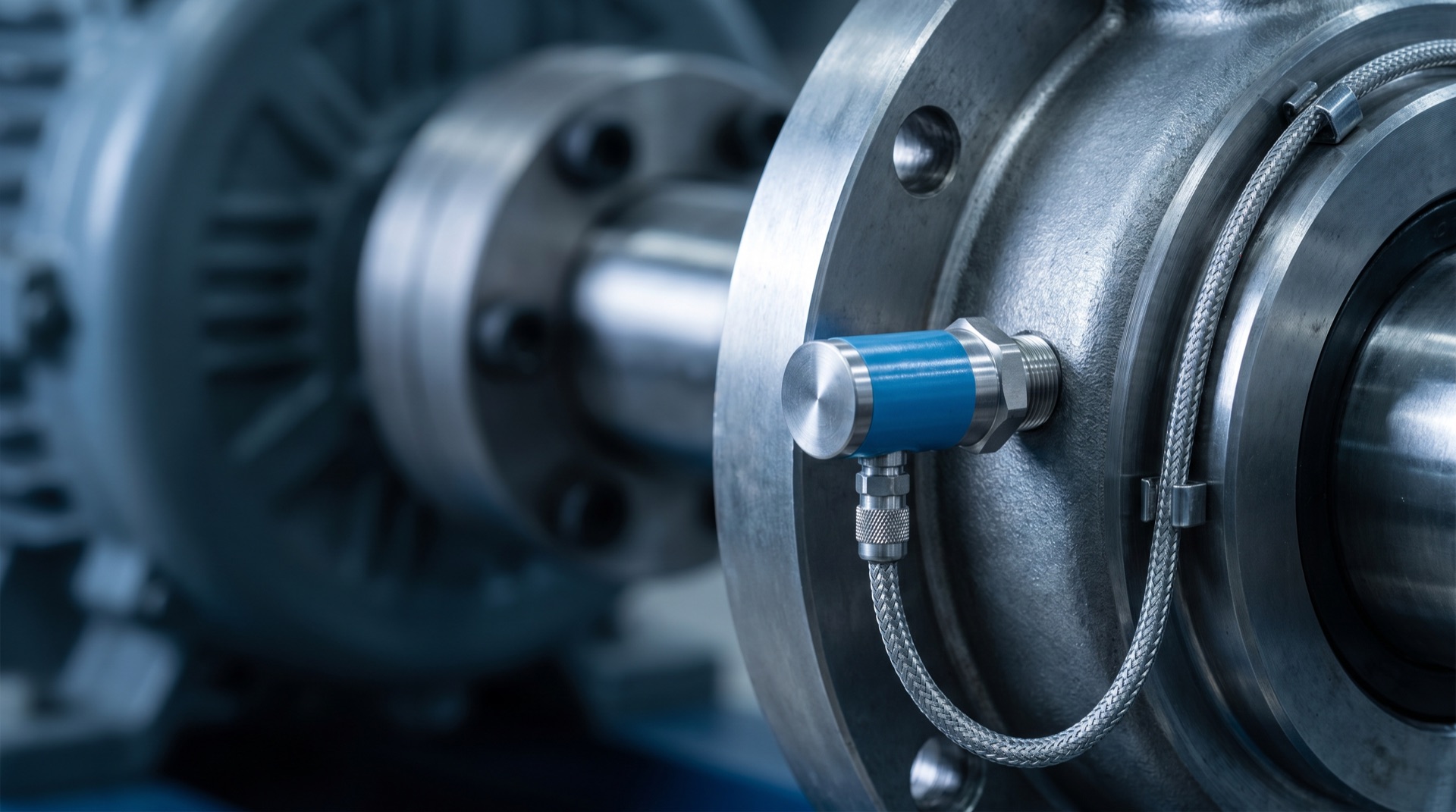
Vibration is the single most informative health indicator on rotating machinery, which is why industrial vibration monitoring is almost always the first layer of a predictive maintenance program. Defects in rolling-element bearings, coupling misalignment, rotor imbalance, mechanical looseness and pump cavitation each produce characteristic vibration patterns. Detected early, a bearing defect is a planned, inexpensive replacement; detected late, it can mean a seized shaft, a destroyed impeller and days of downtime.
The foundation of any vibration program is the sensor. CTH supplies the full range of CTC vibration sensors, industrial accelerometers, connectors, cabling and mounting hardware engineered for harsh plant environments. CTC accelerometers are a popular choice among Canadian reliability teams because they are rugged, broadly interchangeable and straightforward to standardize on across a plant. For applications where velocity output is preferred, or where older monitoring systems expect a velocity signal, our accelerometers and piezo velocity sensors category covers both measurement types.
Mounting and Installation: Where Programs Succeed or Fail
Sensor data is only as good as the mechanical connection between the sensor and the machine. A poorly mounted accelerometer attenuates exactly the high-frequency content that reveals early bearing wear. That is why accelerometer installation tools, spot-facing kits to prepare a flat mounting surface, drill and tap fixtures, adhesive mounting pads, and quick-connect studs, matter as much as the sensors themselves. For walk-around routes, two-pole magnet bases give repeatable placement; for permanent monitoring, stud mounting on a prepared surface delivers the best frequency response. CTH can advise on the right combination of sensors, cabling and installation hardware for your machines.
Routes or Continuous Monitoring?
Most plants start with periodic measurement routes: a technician collects data at defined points on a monthly or quarterly schedule. Routes are cost-effective for balance-of-plant equipment, but they can miss fast-developing faults. For critical or unattended assets, think a sole-duty slurry pump in a mine or a boiler feed pump in a mill, permanently installed accelerometers wired to continuous monitoring or protection systems close that gap. Our detailed guide to vibration analysis for pump protection and early bearing wear detection covers sensor selection, mounting locations, route design and alarm strategy in depth.
Vibration monitoring also pairs naturally with process-side pump protection. A pump that runs dry or dead-headed will show distress in its vibration signature, but the root cause is often a level problem upstream, see our companion guide to point level detection for high/low alarms and pump protection.

Process Control Automation and Industrial Data Recording
Predictive maintenance protects your machines; process control automation protects your product. The two converge in the control room, where accurate control loops and trustworthy records turn raw measurements into consistent quality and audit-ready documentation.
Precision Control with Eurotherm and Jumo
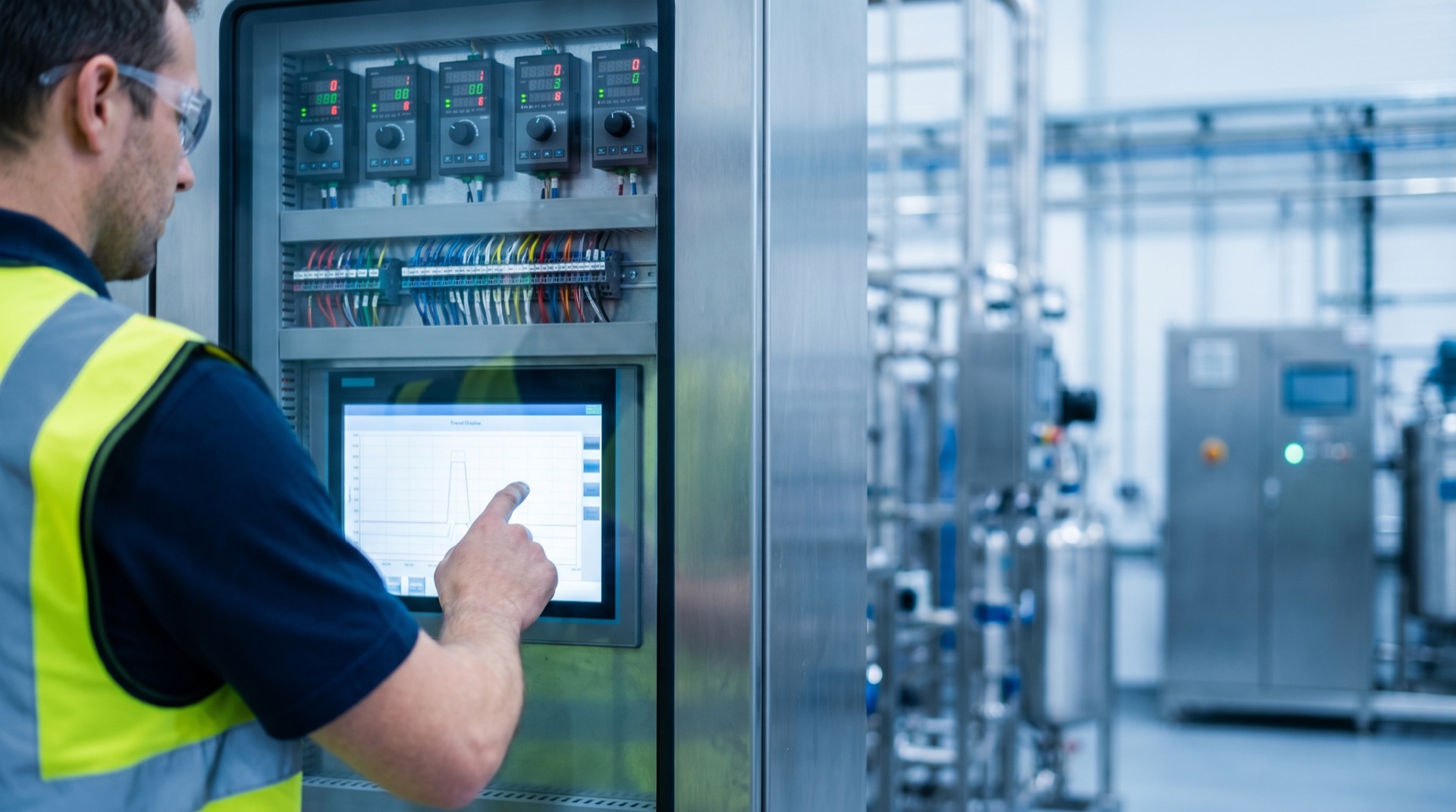
At the heart of most thermal and batch processes sits a PID controller. CTH carries the Eurotherm range of single-loop and multi-loop process controllers, widely used in heat treatment, environmental chambers, kilns and packaging machinery across Quebec and Canada. Eurotherm controllers are configured and documented through Eurotherm iTools, the manufacturer’s configuration software, which lets technicians set up, clone and back up controller configurations, a significant time-saver when commissioning multiple identical loops or replacing a unit in the field. Alongside Eurotherm, CTH supplies Jumo controllers, recorders and sensors for temperature, process and recording duties.
Industrial Data Recording for Compliance
Many industries cannot simply control a process, they must prove it was controlled. Aerospace heat treaters work to pyrometry and recording expectations referenced in AMS2750E; calibration laboratories and quality teams follow ISO 17025 calibration practices; food processors must document thermal processes for safety audits. In each case, the recording instrument is part of the compliance chain, and readers should always confirm specific requirements with their auditor, registrar or the issuing authority.
Paperless graphic recorders have largely replaced ink-and-chart instruments for this work, offering secure, tamper-evident electronic data files, on-screen trending and far lower consumable costs. CTH’s recorders and data acquisition range covers everything from compact paperless recorders to multi-channel data acquisition systems. Our cluster article on advanced process controllers and data recording for compliance explains how to pair controllers and recorders for regulated applications in aerospace heat treatment, food and beverage processing and general industry.
From a reliability standpoint, recorded process history is also condition data. A furnace zone that takes progressively longer to reach setpoint is telling you about element wear; a control valve that needs an ever-larger output to hold flow is telling you about seat erosion. Industrial data recording gives the maintenance team the trend history to catch these signals.
Wireless Sensor Networks for Large Industrial Sites
Condition and process data only have value if they reach the people who can act on them. On a compact plant floor, that is a cabling exercise. On a mine site measured in kilometres, a sprawling tank farm or a petrochemical complex with congested cable trays, running new instrument wiring can cost many times the price of the instruments themselves. Industrial wireless communication removes that barrier.
CTH supplies industrial-grade wireless solutions built for exactly these environments. Elpro wireless I/O and gateway products transmit discrete and analog signals, serial and Ethernet data over licence-free and licensed radio bands, with repeater capability to route around terrain and structures. Elpro radios are designed for long links and harsh RF environments, which makes them well suited to mining and water infrastructure sites across Canada. For battery-powered field measurements, Accutech wireless instrumentation offers self-contained wireless transmitters for pressure, temperature, level and other process variables, instruments you can deploy on a remote sump or tank in hours instead of weeks, with no field wiring at all. Browse the complete wireless sensors range for the full picture.
Key planning questions for an industrial wireless network include:
- Spectrum: unlicensed bands are fast to deploy, while licensed spectrum can offer protected, longer-range links for critical telemetry. The right choice depends on distance, interference and criticality.
- Topology: point-to-point, point-to-multipoint or repeater-extended networks to cover pits, ridgelines and steel-dense process areas.
- Power: battery-powered transmitters such as Accutech wireless field units for locations with no available power, versus powered wireless I/O nodes where infrastructure exists.
- Hazardous areas: many industrial wireless products are available with hazardous-location approvals, verify the certification against your site’s classification and the Canadian Electrical Code requirements, as covered in our guide to instrumentation for hazardous areas and extreme environments.
Our dedicated article on wireless communication in heavy industry for mining and petrochemical sites goes deeper into spectrum choices, repeaters, wireless I/O architectures and battery-powered instrumentation for large Canadian sites.
Industrial Weighing and Load Cell Systems
Weight is one of the most direct and reliable measurements in a plant, and it anchors the process-automation side of a reliability program. A vessel mounted on load cells reports exactly how much material it holds regardless of how that material settles inside it, and the measurement never contacts the product. That makes weighing the backbone of batching accuracy, inventory control and finished-product consistency.
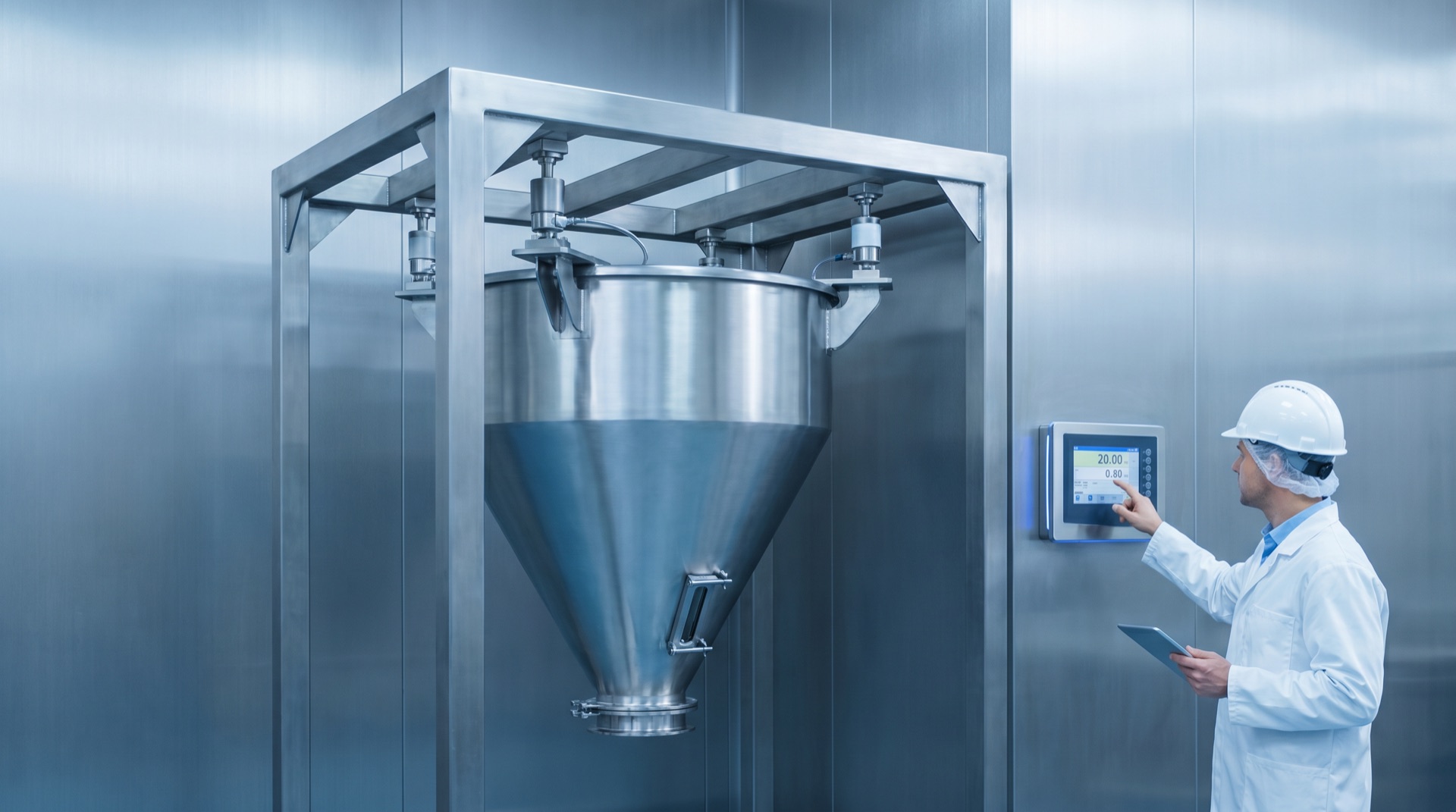
An industrial weighing system combines load cells and mounting hardware with a weight controller, indicator or PLC weight module that reads the cells and converts the signal into a calibrated weight for display, control and communication. CTH supplies the Hardy Instruments weighing portfolio, from load cells and matched mounting assemblies to controllers with batching, loss-in-weight and filling routines, plus diagnostic and calibration features that simplify installation and keep readings stable on machinery-laden structures.
Typical duties include vessel and silo inventory, batching and blending by weight, loss-in-weight feeding, net-weight filling and check weighing, across food and beverage, chemical, pharmaceutical and general manufacturing operations.
Read our full guide to industrial weighing and load cell systems, and see the complete list of manufacturers CTH represents for weighing and other process technologies.
Building Your Predictive Maintenance Program
Technology alone does not make a predictive maintenance program. The plants that succeed follow a disciplined sequence:
- Rank assets by criticality. Score equipment on production impact, safety consequence and repair cost. The top tier earns continuous monitoring; the middle tier gets measurement routes; the bottom tier may reasonably stay run-to-failure.
- Match technologies to failure modes. Vibration for bearings and alignment, weighing for inventory, batching and filling, recorded process trends for thermal equipment, and wireless transmission wherever cabling is impractical.
- Establish baselines. Collect data on healthy machines first. Alarm levels derived from your own baseline data and recognized general guidelines outperform generic thresholds copied from a handbook.
- Connect the data. Bring sensor outputs into recorders, SCADA or historians, using wireless I/O where needed, so trends accumulate automatically rather than living on a technician’s laptop.
- Close the loop. Every alarm should generate a documented inspection or work order, and every finding should feed back into refined alarm levels. Documented results are also what sustain management support for the program.
Remember that condition data is most powerful alongside good process measurement. A pump trending toward failure may actually be reacting to a process problem, gas entrainment, low suction level, flow outside the best-efficiency range. Our companion guides to industrial level measurement technologies and industrial flow measurement and custody transfer cover the process-side instrumentation that completes the picture.
Frequently Asked Questions
What is the difference between predictive and preventive maintenance?
Preventive maintenance replaces parts on a fixed schedule regardless of their condition, which wastes component life and still misses failures between intervals. Predictive maintenance measures the actual condition of equipment, through vibration monitoring, oil analysis and recorded process trends, and triggers work only when measurable degradation appears. Most plants use both: predictive techniques on critical assets, simple preventive tasks elsewhere.
What sensors are used for industrial vibration monitoring?
The workhorse sensor is the industrial accelerometer, typically a rugged piezoelectric unit mounted on bearing housings. CTC accelerometers are among the most widely used in Canadian plants, supported by piezo velocity sensors where a velocity signal is preferred. Equally important are accelerometer installation tools, spot-facing kits, mounting pads, studs and magnet bases, because mounting quality directly determines how early a developing bearing fault can be detected. See our CTC vibration sensor range for details.
Can wireless instruments like Elpro and Accutech be used in hazardous areas?
Many industrial wireless products, including models in the Elpro and Accutech wireless ranges, are offered with hazardous-location approvals. The critical step is matching each device’s certification to your specific area classification under the Canadian Electrical Code and applicable CSA requirements, always verify the marking on the actual model against your site classification, and consult your inspection authority when in doubt. Our hazardous area classifications guide explains zones, divisions and protection methods.
What software is used to configure Eurotherm controllers?
Eurotherm iTools is the manufacturer’s configuration package for Eurotherm controllers and related instruments. It allows technicians to configure parameters from a PC, clone settings between units and archive configurations for documentation, particularly valuable when commissioning multiple loops or swapping a controller during an outage. CTH supplies and supports the Eurotherm line for Canadian customers.
How does industrial data recording support compliance audits?
Standards and specifications such as ISO 17025 for calibration practices and AMS2750E for aerospace heat-treatment pyrometry place expectations on how process data is measured, recorded and retained. Paperless graphic recorders produce secure electronic records with trending and batch documentation that auditors can review, replacing fragile paper charts. Requirements vary by industry and registrar, so confirm specifics with the relevant authority, and see our recorders and data acquisition products for suitable hardware.
Request an Application Engineering Consultation
Every predictive maintenance and process automation project starts with the right measurement. Whether you are specifying CTC accelerometers for a pump fleet, configuring Eurotherm controllers and recorders for a regulated thermal process, or planning an Elpro or Accutech wireless network across a remote site, CTH’s application engineers can help you match proven instrumentation to your assets and your budget. We represent a broad portfolio of leading instrumentation manufacturers and support customers across Quebec and Canada from selection through commissioning. Request an application engineering consultation today and tell us about your application.