






Selecting the right industrial level measurement technology is one of the most consequential instrumentation decisions a process plant makes. The transmitter or switch you specify today determines measurement reliability, maintenance burden, and process safety for a decade or more, and the wrong sensing principle on the wrong medium produces nuisance trips, blind spots, and unplanned shutdowns. This guide gives process engineers, instrumentation specialists, and maintenance managers a complete framework for evaluating every major level technology, from RF admittance and guided wave radar to non-contact radar, ultrasonic, hydrostatic, magnetostrictive, and nuclear systems, along with the point level switches that protect pumps and prevent overfills. It draws on the application engineering experience CTH Industrial Controls has built supporting industrial level measurement Quebec-wide and across Canada.
Use the table of contents to jump to a specific technology, or read end to end for the full selection framework.
On this page
- What Is Industrial Level Measurement?
- Continuous Level Measurement Technologies
- Point Level Detection: Switches and Alarms
- Level Measurement Technology Comparison Table
- How to Select the Right Level Measurement Technology
- Level Measurement Across Quebec and Canadian Industries
- In-Depth Level Measurement Guides
- Frequently Asked Questions
- Request an Application Engineering Consultation
What Is Industrial Level Measurement?
Industrial level measurement is the practice of determining the height, volume, or mass of a liquid, slurry, powder, or bulk solid inside a tank, vessel, silo, sump, or open channel. It is one of the most universally required functions in process control: virtually every plant stores, transfers, blends, or reacts material in vessels, and every one of those vessels must be monitored to keep the process running and the site safe.
Level measurement instruments fall into two broad families:
- Continuous level measurement provides a real-time, proportional reading of level at every point in the vessel. Continuous transmitters feed tank level monitoring systems, inventory management software, and control loops, typically over a 4-20 mA analog signal or digital protocols such as HART, Modbus, or PROFIBUS.
- Point level detection answers a simpler question: has the material reached this specific height? Point level switches drive high and low alarms, pump protection interlocks, and overfill prevention schemes.
Most well-instrumented vessels use both: a continuous transmitter for control and inventory, plus independent point level switches as a safety backstop. Because no single sensing principle suits every medium, temperature, pressure, and vessel geometry, engineers need access to a broad range of level measurement instruments, and to the application engineering judgment that matches the right principle to the process rather than the product a supplier happens to stock.

Continuous Level Measurement Technologies
Seven sensing principles dominate continuous level measurement in Canadian industry. Each earns its place in a specific set of conditions, and each has constraints that disqualify it elsewhere. CTH Industrial Controls supplies one of the broadest portfolios of continuous level sensors Canada-wide, anchored by the Ametek Drexelbrook continuous level measurement range and complemented by Foxboro, Pulsar, and Ronan instrumentation, so the recommendations below reflect what each technology genuinely does best.
RF Admittance Level Measurement
RF admittance, an evolution of RF capacitance technology, applies a low-power radio frequency signal to a probe mounted in the vessel and measures the change in admittance as material rises and falls around it. The decisive advance of modern RF admittance over older capacitance designs is coating rejection: dedicated circuitry distinguishes true level from conductive or sticky build-up on the probe, so the reading stays trustworthy even as the probe fouls.
Ametek Drexelbrook is widely regarded as the global leader in RF admittance technology, and it is the name most instrumentation engineers reach for when specifying this principle. Ametek Drexelbrook RF admittance systems measure liquids, slurries, granular solids, and powders, and they keep working in services where other technologies surrender, including hot oil at extreme temperatures and cryogenic liquefied gas storage. With no moving parts and a rugged probe as the only wetted component, RF admittance is a workhorse for chemical, petrochemical, and heavy-industrial vessels. Browse the full RF admittance level measurement range to see the probe styles and electronics available through CTH.
Guided Wave Radar (TDR)
Guided wave radar, also called time domain reflectometry, launches microwave pulses down a rigid or flexible probe and times the reflection from the material surface. Because the energy is concentrated along the probe rather than radiated into open space, guided wave radar is far less affected by vapour, foam, and turbulence than free-space radar, and it reads low dielectric media that give weaker reflections to other technologies. It is also one of the few principles that can measure a liquid-liquid interface, such as oil floating on water, with a single instrument.
Guided wave radar transmitters are part of the multi-technology Ametek Drexelbrook portfolio that CTH supports, which means our application engineers can recommend guided wave radar when it genuinely fits the service rather than defaulting to it. For a head-to-head decision framework covering probe selection, coating media, interface duty, and severe temperatures, read RF Admittance vs. Guided Wave Radar: Level Measurement for Extreme Conditions.
Non-Contact (Free-Space) Radar
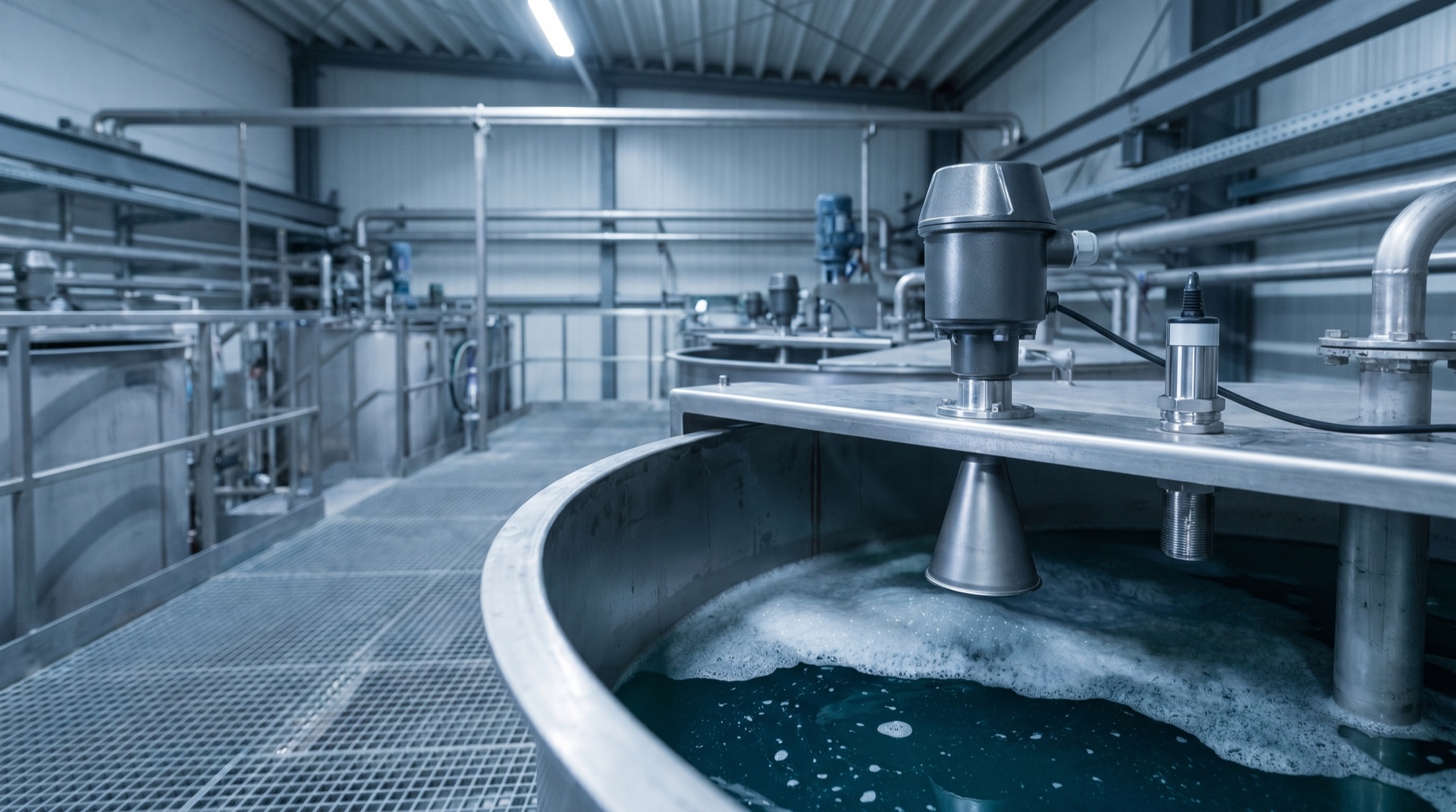
Non-contact radar transmitters mount at the top of the vessel and radiate microwave pulses toward the surface, calculating level from the time of flight of the reflected signal. Nothing touches the process, which makes free-space radar increasingly the technology of choice for demanding applications: corrosive, viscous, sticky, and foaming liquids, vapour-laden atmospheres, and solids or powders in tall silos. Radar is largely indifferent to the temperature swings, vapour layers, and pressure changes that defeat ultrasonic devices.
CTH supplies the Foxboro Level Wave radar series, engineered for all liquids including corrosive, viscous, sticky, and foaming media, as part of the Foxboro level measurement line. To decide between the two leading non-contact principles, see Non-Contact Level Measurement: Radar vs. Ultrasonic Sensors.
Ultrasonic Level Sensors
Ultrasonic level sensors emit sound pulses toward the material surface and measure the echo return time. Like radar, they are non-contact and require no process penetration, but they reach that result at a lower price point, which makes ultrasonic the cost-effective standard for clean liquids at moderate temperatures. The technology dominates water and wastewater treatment, municipal reservoirs, lift stations, and open channel flow measurement. CTH carries Pulsar instrumentation for level, volume, open channel flow, and sludge interface measurement, a portfolio purpose-built for the municipal and environmental sectors.
Ultrasonic has clear boundaries: heavy foam absorbs the echo, dense vapour and steep temperature gradients shift the speed of sound, and vacuum service leaves no medium to carry the pulse at all. Where any of those conditions appear, non-contact radar is usually the better answer.
Hydrostatic Pressure Level Measurement
Hydrostatic pressure transmitters infer level from the pressure exerted by the column of liquid above the sensing element, using either a submersible probe lowered into the vessel or a transmitter mounted at the bottom of the tank. The approach is simple, reliable, and cost-effective for open tanks and wells, and it is a staple of water and wastewater treatment, municipal reservoirs, and groundwater monitoring across Quebec and Canada. Its main constraint is physics: the reading depends on liquid density, so products whose density shifts with temperature or composition need compensation or a different technology. Explore the hydrostatic pressure level measurement range for submersible and tank-mounted options.
Magnetostrictive Level Transmitters
Magnetostrictive transmitters track the position of a magnetic float riding along a sensing rod, locating it precisely by timing a torsional pulse in the waveguide. The result is extremely high-accuracy continuous level measurement for clean liquids, which is why the technology anchors custody transfer tank gauging and high-accuracy inventory management, applications where small level errors translate directly into money. The float is also the technology’s limitation: slurries, solids, and crystallizing products foul the float and rod, so magnetostrictive instruments belong on clean services. See the magnetostrictive level measurement category for available configurations.
Nuclear (Radiometric) Level Measurement
Nuclear level measurement mounts a sealed gamma source on one side of the vessel and a detector on the other; level is calculated from how much radiation the process material attenuates. It is the only completely non-invasive principle: no process penetration, no wetted parts, nothing inside the vessel at all. That makes a nuclear level transmitter the instrument of last resort and first choice for vessels containing toxic, caustic, explosive, or carcinogenic materials, and for extreme temperature and pressure services where no inserted probe would survive.
CTH supplies Ronan radiometric systems, including the Ronan X90 series, which install externally on the vessel wall, often without interrupting production. Nuclear gauges do carry licensing and administrative obligations that other technologies avoid, so the decision deserves careful framing. Our full guide, Nuclear Level Measurement Systems for Extreme Process Vessels, walks through when radiometric measurement is justified, and the nuclear level measurement category lists the systems available through CTH.
Point Level Detection: Switches and Alarms
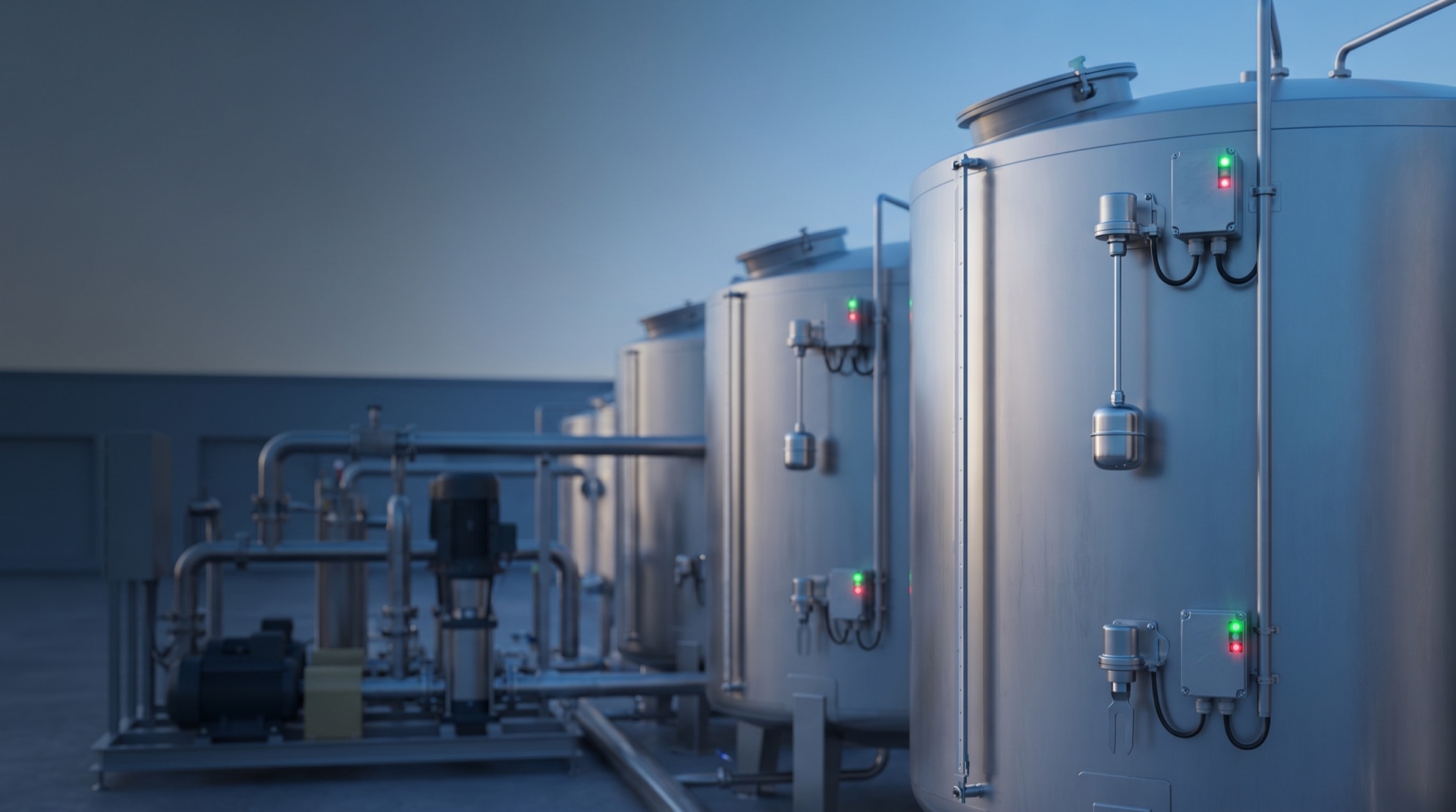
Continuous transmitters get the engineering attention, but point level switches do the unglamorous work of keeping plants safe. A point level switch changes state when material reaches a preset height, driving high and low alarms, pump dry-run protection, and overfill prevention interlocks. Because they operate independently of the continuous measurement, point switches provide the diverse, redundant layer of protection that good instrumentation practice demands.
A SOR level switch is a fixture in Canadian plants for good reason: SOR Controls float and displacement-style switches are mechanically simple, robust, and field-proven across decades of pump control and alarm duty in refineries, mills, and utilities. For sticky, coating, or otherwise difficult media where a mechanical float would hang up, Ametek Drexelbrook point level switches apply the same coating-rejecting RF admittance principle described above to deliver reliable discrete switching. Browse SOR level measurement instruments and the broader catalogue of level sensors available through CTH.
For a complete treatment of switch technologies, alarm philosophy, and pump protection wiring practice, read Point Level Detection: Switches for High/Low Alarms and Pump Protection.

Level Measurement Technology Comparison Table
The table below summarizes the eight approaches covered in this guide. Treat it as a starting filter, not a final answer: the right choice always depends on the specific combination of medium, process conditions, and vessel geometry, which is why an application review with an experienced instrumentation engineer pays for itself.
| Technology | Contact or Non-Contact | Typical Use Cases | Key Constraints |
|---|---|---|---|
| RF admittance | Contact (probe) | Liquids, slurries, solids, and powders; coating and build-up services; extreme heat and cryogenic duty | Requires a wetted probe; probe inspection in heavy-fouling services |
| Guided wave radar | Contact (probe) | Interface measurement; low dielectric liquids; foamy or vapour-laden vessels | Probe fouling on sticky media; probe must clear vessel internals |
| Free-space radar | Non-contact | Corrosive, viscous, or foaming liquids; solids in silos; high temperature and pressure | Higher initial cost; antenna choice and mounting location matter |
| Ultrasonic | Non-contact | Clean liquids; water and wastewater; open channel flow | Defeated by foam, dense vapour, and vacuum |
| Hydrostatic pressure | Contact (submerged or tank-mounted sensor) | Open tanks, wells, reservoirs, groundwater monitoring | Reading varies with liquid density |
| Magnetostrictive | Contact (float) | High-accuracy tank gauging, inventory, custody transfer | Not for slurries or solids; float can foul |
| Nuclear (radiometric) | External, non-contact | Toxic, caustic, or explosive media; vessels where penetration is impossible | Licensing and administrative requirements |
| Point level switches | Contact (typically) | High and low alarms, pump protection, overfill prevention | Discrete indication only; no continuous output |
How to Select the Right Level Measurement Technology
Every successful level instrument specification starts with the application, not the catalogue. Work through these seven factors in order, and the field of candidate technologies usually narrows itself to one or two.
- Media properties. Is the material a liquid, solid, slurry, or powder? What are its dielectric constant, conductivity, and viscosity, and does it coat, crystallize, or build up on surfaces? Coating media push the decision toward RF admittance or non-contact radar; low dielectric liquids favour guided wave radar.
- Process conditions. Operating temperature, pressure, and the presence of vapour, foam, turbulence, or agitation each eliminate specific technologies. Foam alone is enough to remove ultrasonic from the shortlist; extreme temperatures point toward RF admittance, radar, or nuclear.
- Vessel geometry. Tank height, nozzle size and location, internal agitators, heating coils, and baffles determine what can physically be installed and where. A probe that fits the datasheet may still not fit the vessel.
- Accuracy and output requirements. Inventory and custody transfer demand the accuracy of magnetostrictive or radar gauging; basic pump control tolerates far more. Confirm the output the control system expects, whether 4-20 mA, HART, Modbus, PROFIBUS, or relay contacts.
- Climate and environment. Outdoor installations in Quebec and across Canada face freezing spray, condensation, ice, and deep winter cold. Electronics temperature ratings, heated enclosures, and mounting positions that shed ice deserve as much attention as the sensing principle itself.
- Safety and redundancy. Decide early which functions are safety-related. Overfill prevention and pump protection should rely on independent point level switches, not on the same transmitter that runs the control loop, and instruments in classified areas need approvals appropriate to the location.
- Maintenance and lifecycle. Consider access for probe cleaning, availability of spares, and local technical support. The cheapest instrument on the purchase order is rarely the cheapest over ten years of service.
Level Measurement Across Quebec and Canadian Industries
Tank level monitoring systems look different in every sector, and the technology mix follows the process. Across the industries CTH serves, the patterns are consistent:
- Mining and minerals processing lean on RF admittance and radar for slurries, ore bins, and reagent tanks where abrasion and build-up are constant.
- Pulp and paper mills combine guided wave radar and RF admittance on stock chests and liquor tanks, with SOR level switches protecting pumps throughout the mill.
- Water and wastewater utilities standardize on Pulsar ultrasonic and hydrostatic instruments for reservoirs, lift stations, clarifiers, and open channel flow.
- Chemical and petrochemical plants draw on the full toolbox, from Foxboro radar on corrosive and foaming media to Ronan nuclear level transmitters on vessels no probe should ever enter.
- Food, beverage, and agri-processing facilities favour non-contact radar and hydrostatic measurement for tanks, silos, and ingredient handling.
- Energy and utilities rely on magnetostrictive gauging for high-accuracy inventory and on redundant point level switches for boiler and storage protection.
Quebec process facilities add their own constraint to every one of these applications: a climate that tests outdoor instrumentation harder than almost anywhere else the equipment is sold. Specifying with local conditions in mind, and with a supplier who has seen the failure modes before, is the difference between an instrument that survives commissioning and one that survives ten winters.
In-Depth Level Measurement Guides
This pillar page is the hub of a complete series. Each guide below goes a level deeper on one branch of the decision tree:
- RF Admittance vs. Guided Wave Radar: Level Measurement for Extreme Conditions, a head-to-head comparison of the two leading contact technologies for coating, high-temperature, and interface services.
- Non-Contact Level Measurement: Radar vs. Ultrasonic Sensors, a practical framework for choosing between the two non-contact principles on liquids, solids, and open channels.
- Nuclear Level Measurement Systems for Extreme Process Vessels, covering when radiometric measurement is justified and how externally mounted systems are applied.
- Point Level Detection: Switches for High/Low Alarms and Pump Protection, the complete guide to level switch technologies, alarm philosophy, and pump safeguarding.
Frequently Asked Questions
What is the difference between continuous level measurement and point level detection?
Continuous level measurement provides a proportional, real-time reading of the material level throughout the vessel, which is what control loops, inventory systems, and tank level monitoring systems consume. Point level detection provides a discrete signal when material reaches one preset height, which is what alarms and interlocks need. Critical vessels should use both: a continuous transmitter for operation, plus independent point level switches for overfill prevention and pump protection, so a single instrument failure never removes both functions at once.
When should I choose guided wave radar instead of non-contact radar?
Choose guided wave radar when the application involves foam, heavy vapour, turbulence, low dielectric liquids, tight nozzles, or liquid-liquid interface measurement, because the guided pulse concentrates energy along the probe and returns a stronger, cleaner reflection. Choose non-contact radar when nothing should touch the process, such as corrosive or sticky media, or when measuring solids in tall silos where a probe is impractical. When both could work, vessel internals and maintenance access usually settle the question.
Are nuclear level transmitters safe to use in an industrial plant?
Yes, when properly licensed and managed. A nuclear level transmitter uses a sealed, shielded gamma source mounted on the outside of the vessel, with a detector on the opposite side, so nothing radioactive or otherwise contacts the process. Plants choose radiometric systems such as the Ronan X90 series precisely because they are the safest practical option for vessels containing toxic, caustic, or explosive materials. The technology does involve licensing and administrative controls, and an experienced supplier will help determine whether that overhead is justified for your application.
Which level switch is best for pump protection and high or low level alarms?
For clean and moderately dirty liquids, a SOR level switch with a mechanical float or displacement element is the proven default: simple, rugged, and dependable across decades of industrial service. For sticky, coating, or viscous media that would hang up a float, an Ametek Drexelbrook RF admittance point level switch delivers reliable discrete switching with no moving parts. In every case, wire the protective switch independently of the continuous transmitter so the safety function survives a transmitter failure.
What is the best level measurement technology for solids and powders in silos?
Non-contact radar, such as the Foxboro Level Wave series, is typically the preferred continuous technology for solids and powders because it tolerates dust, requires no contact with the moving material, and reads reliably across tall silos. RF admittance probes from Ametek Drexelbrook are a strong alternative for granular solids and powders, particularly for point level duty in bins and hoppers. Ultrasonic devices generally struggle in dusty silo atmospheres. Mounting position matters more with solids than with liquids, because the material surface forms an angle of repose rather than a flat plane.
Request an Application Engineering Consultation
Every guideline in this article eventually meets a real vessel, a real medium, and a real set of process conditions, and that is where application engineering earns its keep. CTH Industrial Controls supplies and supports level measurement instrumentation across Quebec and Canada, with a portfolio spanning Ametek Drexelbrook, Foxboro, Pulsar, Ronan, and SOR Controls, a broad level measurement offering from a single supplier. Because we carry multiple technologies, our engineers recommend the principle that fits your process, not the one product on the shelf.
Tell us about your application, including the medium, the vessel, and the conditions, and we will help you specify the right instrument the first time. Request an application engineering consultation with our team, or explore the full range of manufacturers and control instruments available through CTH. You can also reach us directly at 450-671-2181.