




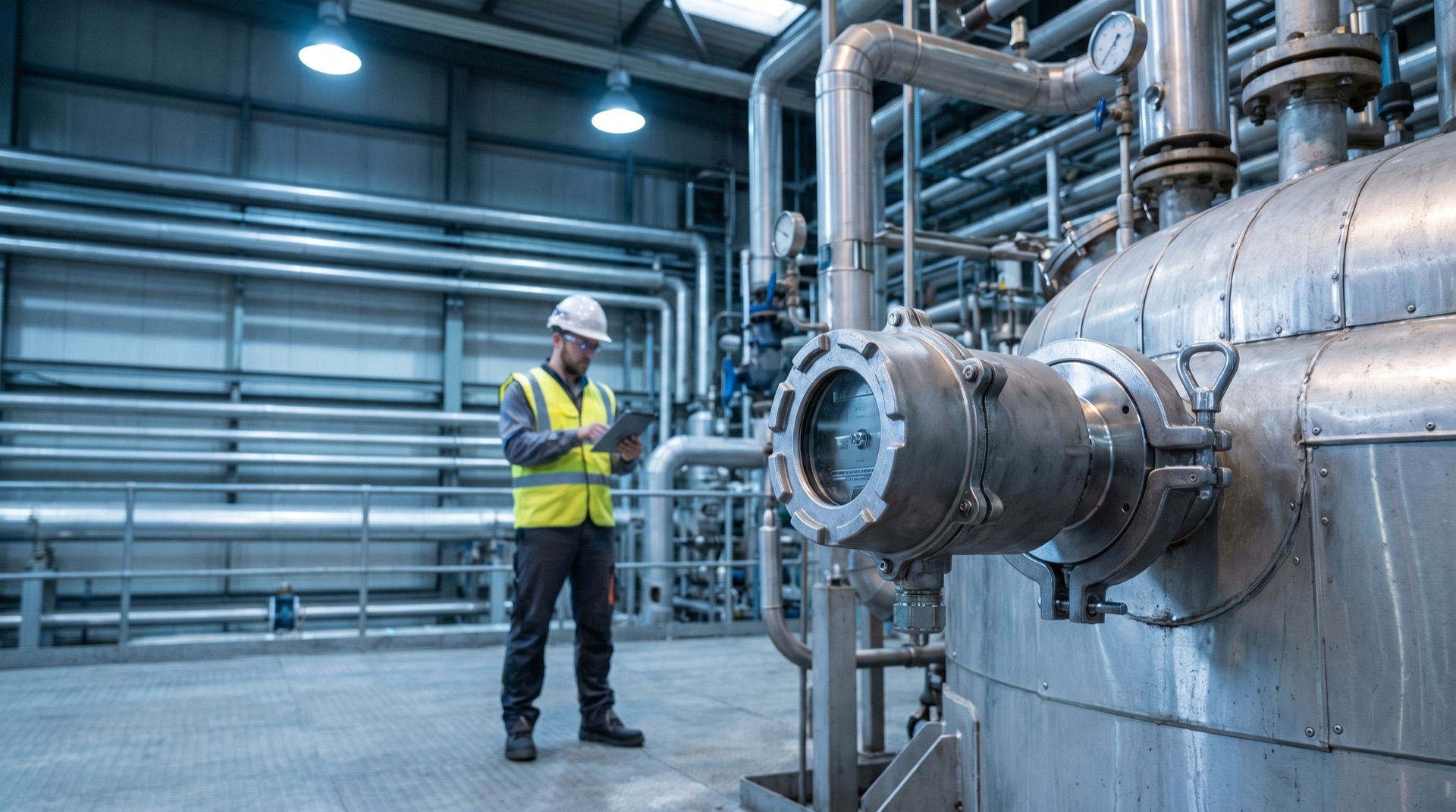
Some process vessels defeat every conventional level instrument. Delayed coker drums, pressure oxidation autoclaves, vessels handling hydrofluoric acid or molten sulphur, environments where probes corrode, nozzles plug and electronics cook within weeks of installation. For these applications, nuclear level measurement offers something no other technology can match: completely non-invasive operation. The source and detector mount on the outside of the vessel wall, so nothing ever touches the process. When the medium is too hot, too corrosive, too pressurized or too toxic for anything else, a gamma-based system is frequently the only instrument that survives.
This article is part of our definitive guide to industrial level measurement technologies. Below, we explain how nuclear level transmitters and gauges actually work, where they earn their keep in petrochemical and mining operations, how they compare with alternative technologies, and what Canadian plants should understand about source licensing before specifying one.
How Nuclear Level Measurement Works
A nuclear (or radiometric) level system has two main components, both mounted externally. On one side of the vessel sits a sealed gamma source, typically Cesium-137 or, for very thick-walled or large-diameter vessels, Cobalt-60, housed in a heavily shielded holder that collimates the radiation into a narrow, controlled beam aimed through the vessel. On the opposite side, a detector (commonly a scintillation type) measures how much of that gamma energy arrives.
The measuring principle is attenuation. Process material absorbs gamma radiation far more effectively than vapour does. As the level inside the vessel rises, more of the beam path is blocked, less radiation reaches the detector, and the transmitter electronics convert the change in detected counts into a calibrated level signal, typically 4-20 mA with HART or a digital protocol for the control system.
Because the entire measurement happens through the vessel wall, nuclear systems are indifferent to almost everything that destroys other instruments:
- No wetted parts. Corrosive, abrasive, toxic or sticky media never contact the instrument.
- No vessel penetrations. There are no nozzles to plug, no seals to leak and no process shutdown required for installation on most vessels.
- Immune to process conditions. Extreme temperature, high pressure, vacuum, foam, agitation, vapours and internal obstructions inside the vessel do not prevent the measurement.
- Works on virtually any vessel. Reactors, columns, autoclaves and vessels with linings, jackets or refractory can all be measured externally.
When Nothing Else Survives: Extreme Vessel Applications
Nuclear level instrumentation is rarely the first technology an engineer reaches for, and that is by design. It is the technology of last resort, deployed where the process conditions eliminate everything else. In practice, that describes a meaningful share of vessels in two industries CTH serves extensively across Quebec and Canada.
In petrochemical and refining service, classic applications include delayed coker drums, where temperature, coking and foam defeat contact probes; alkylation units handling hydrofluoric or sulphuric acid, where any vessel penetration is a safety liability; high-pressure separators and reactors; and sulphur recovery vessels handling molten sulphur.
In mining and mineral processing, gamma-based systems handle pressure oxidation autoclaves, dense and abrasive slurry tanks, flotation cells with heavy froth, and crusher or surge bins where dust and falling rock destroy intrusive sensors. Our overview of mining instrumentation and monitoring in Canada covers the broader measurement challenges these sites face. Beyond level, the same attenuation principle supports density and interface measurement on slurry lines, a major reason radiometric systems are so common in concentrators. CTH supports these and other process industries with application engineering for exactly these worst-case vessels.
Nuclear Level Transmitter or Nuclear Level Gauge? Continuous and Point Configurations
The terms are often used interchangeably, but it helps to distinguish the main configurations when specifying a system.
| Configuration | Arrangement | Output | Typical use |
|---|---|---|---|
| Continuous nuclear level transmitter | Point source with an elongated detector spanning the measuring range (or multiple sources/detectors on tall vessels) | Continuous 4-20 mA / digital level signal | Inventory, control and safety-related level on reactors, drums and autoclaves |
| Nuclear level gauge (point switch) | Source and compact detector aimed across the vessel at one elevation | Discrete high/low switch state | High-level alarms, overfill protection, low-level pump protection |
| Density / interface system | Source and detector across a pipe or vessel section | Continuous density or interface signal | Slurry density in mineral processing, interface tracking in separators |
A point-type nuclear level gauge plays the same role as conventional switches do in less hostile vessels, our guide to point level detection for high/low alarms and pump protection explains that logic in detail. The difference is simply that the gamma switch keeps working where a vibrating fork or capacitance probe would be destroyed in days.
How Nuclear Compares to Other Extreme-Service Level Technologies
Before committing to a radiometric system, it is worth confirming that a less involved technology genuinely cannot do the job. The honest comparison looks like this:
| Technology | Process contact | Vessel penetration | Best suited for |
|---|---|---|---|
| Nuclear (gamma) | None, fully external | None | Vessels where temperature, pressure, corrosion, toxicity or buildup rule out all other options |
| Guided wave radar | Wetted probe | Yes | High-pressure, high-temperature vessels where a probe can survive and a nozzle exists |
| RF admittance | Wetted probe | Yes | Sticky, coating and conductive media that foul other contact probes |
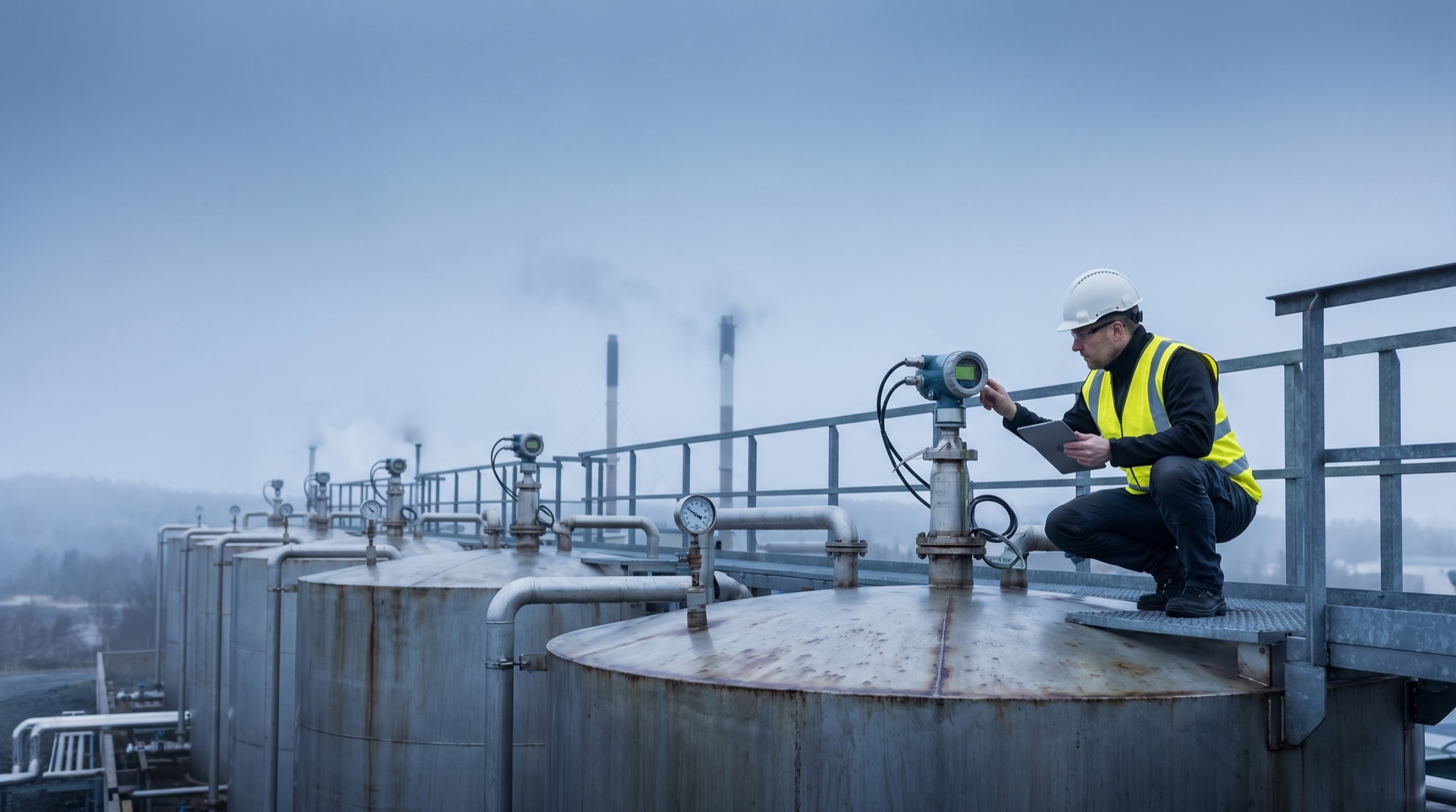
| Non-contact radar / ultrasonic | None (sensor in vapour space) | Top opening required | Tanks and silos with available top access and a workable vapour space |
If a wetted probe can survive your process, our comparison of RF admittance versus guided wave radar for extreme conditions will likely identify a simpler solution. If the issue is merely that you cannot touch the product, not that the vessel itself is hostile, review non-contact radar and ultrasonic level sensors first. Nuclear systems carry a higher purchase cost, regulatory obligations and end-of-life source disposal responsibilities, so they should be specified when the application genuinely demands them. When it does, nothing else comes close: no other technology delivers reliable level measurement with zero process contact and zero vessel penetration.
Source Licensing in Canada: What the CNSC Regulates
In Canada, sealed radioactive sources and the gauges that contain them fall under the jurisdiction of the Canadian Nuclear Safety Commission (CNSC). At a general level, organizations that possess and use nuclear gauges are typically subject to licensing requirements covering how devices are acquired, installed, operated, maintained, transferred and ultimately disposed of. Programs commonly involve designated trained personnel, periodic source leak testing, record-keeping and procedures for safe work around the gauge.
Two practical points are worth emphasizing. First, the engineering of these devices works strongly in your favour: the source is sealed, shielded and collimated so that the useful beam is directed through the vessel, and properly installed gauges are designed for safe routine work in their vicinity. Second, licensing is manageable, fixed nuclear gauges are a well-established, routinely licensed instrument class in Canadian industry, but it is a real obligation that belongs in your project plan and lifecycle budget from day one.
Requirements depend on the device, the isotope and your activities, and they evolve over time, so do not rely on summaries: verify current licensing requirements directly with the CNSC before purchasing or relocating any nuclear gauge. Manufacturers also provide documentation that supports the licensing process, and CTH can help you assemble the right technical information for your application.
Ronan Nuclear Level Measurement Systems from CTH
CTH Industrial Controls supplies nuclear level measurement systems from Ronan, a manufacturer specializing in radiometric level, density and interface instrumentation for the world’s most difficult vessels. Ronan’s gamma-based product line spans continuous level transmitters, point level gauges for alarm and protection duties, and density measurement systems used throughout refining, chemical processing and mineral processing.
Because every radiometric installation is engineered around a specific vessel, wall thickness, diameter, internals, measuring span and process density all influence source sizing and detector selection, these are not catalogue commodities. CTH’s role is to capture those application details, work with Ronan on the system design, and support Quebec and Canadian customers through commissioning and the operating life of the gauge.
Frequently Asked Questions
How does a nuclear level transmitter work?
A shielded gamma source mounted outside the vessel directs a narrow beam through the vessel wall toward an external detector on the opposite side. Process material absorbs gamma radiation, so as level rises the detector receives less energy. The transmitter converts the detected radiation into a continuous level signal for your control system, with no part of the instrument ever contacting the process.
Is nuclear level measurement safe for plant personnel?
Properly engineered and installed systems are designed for safe routine work nearby. The source is sealed inside a shielded holder that collimates radiation into a controlled beam aimed through the vessel. Safety is maintained through correct installation, posted procedures, trained personnel and the regulatory program required by the CNSC, which is why working with an experienced supplier and manufacturer matters.
Do I need a licence to operate a nuclear level gauge in Canada?
Generally, organizations possessing or using devices containing sealed radioactive sources are subject to CNSC regulatory requirements, which typically include licensing. The specifics depend on the device and your activities, so confirm current requirements directly with the Canadian Nuclear Safety Commission before acquiring, moving or disposing of a gauge. Manufacturers such as Ronan provide device documentation that supports the application process.
When should I choose nuclear level measurement over radar?
Choose radar, guided wave or non-contact, whenever the process allows it; it is simpler and carries no licensing obligations. Nuclear level measurement is justified when conditions eliminate radar: no available nozzle or top access, extreme temperature or pressure at the connection, severely corrosive or toxic media where any penetration is unacceptable, or heavy coating and internals that defeat in-vessel sensors.
Can a nuclear level gauge also measure density or interface?
Yes. The same gamma attenuation principle measures density when level is constant, a configuration widely used on slurry lines in mineral processing, and can track interfaces between materials of different densities in separators. Many plants standardize on radiometric systems precisely because one technology family covers level, point level, density and interface in their harshest service.
Request an Application Engineering Consultation
Specifying a radiometric system involves vessel geometry, process data, source sizing and Canadian licensing considerations, decisions worth getting right the first time. CTH’s application engineers work with Ronan and the other manufacturers CTH represents to design measurement solutions for the vessels nothing else can handle. Request an application engineering consultation and tell us about your most difficult vessel.
And if you are still weighing technologies, return to our complete guide to industrial level measurement technologies for the full comparison of contact, non-contact and nuclear level measurement options across every application class.