


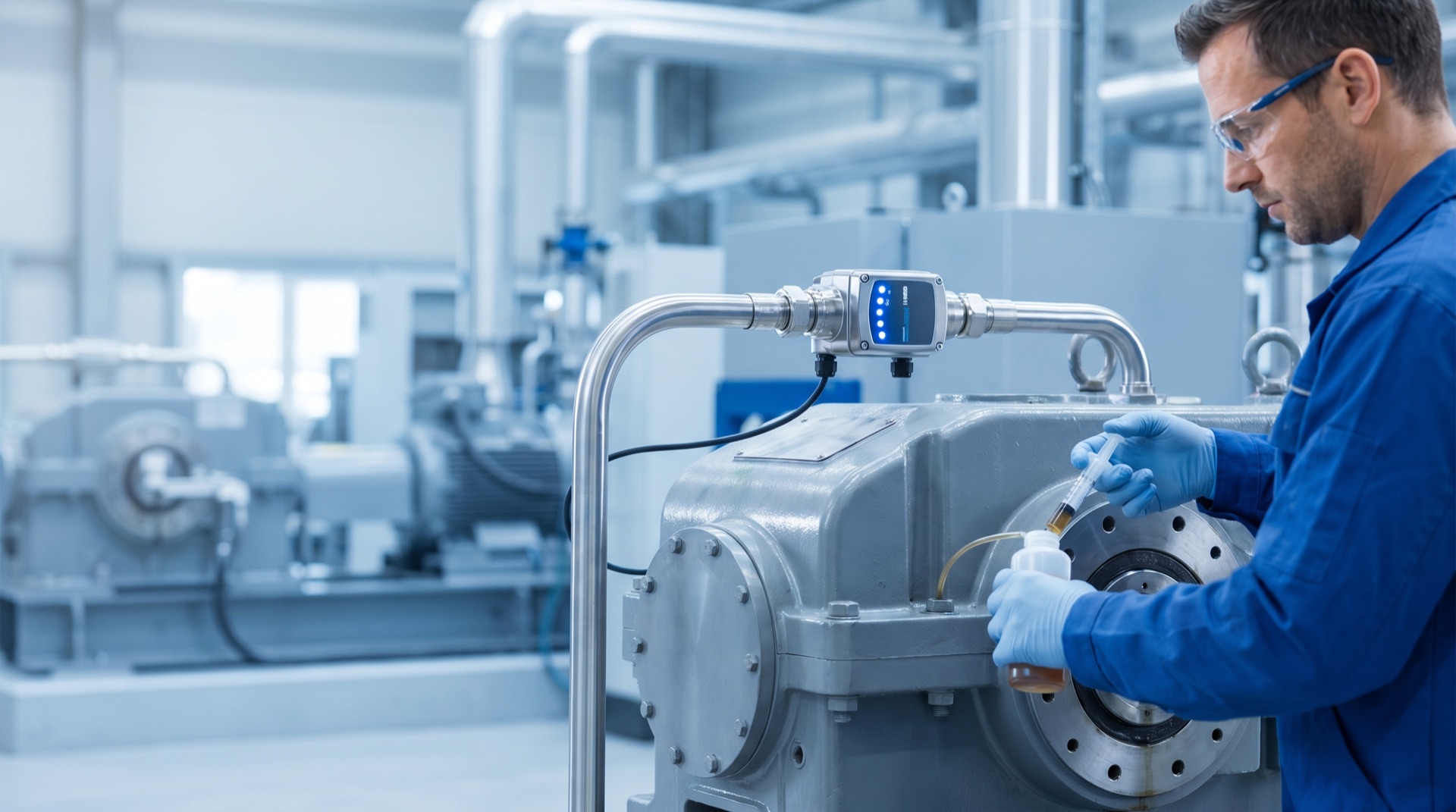
Lubricating oil is the lifeblood of rotating equipment, and uncontrolled moisture is one of the most persistent threats to both machinery and product quality. Oil condition monitoring gives maintenance teams a continuous, real-time picture of lubricant health, while industrial moisture monitoring keeps processes and finished products within specification. Together, these two sensing disciplines form one of the most cost-effective branches of a modern reliability program, flagging degradation weeks or months before it surfaces as a seized bearing, a failed gearbox or an off-spec production batch.
This resource is part of our complete guide to predictive maintenance and process automation. Below, we explain two complementary concepts, tan delta oil quality sensing and near-infrared (NIR) moisture measurement, and how mining, food and beverage, and petrochemical plants across Quebec and Canada apply them.
Why Oil Condition Monitoring Outperforms Periodic Sampling
For decades, lubricant management has meant periodic sampling: a technician draws oil from a gearbox or reservoir, ships it to a laboratory and waits for a report. Laboratory analysis remains valuable, but as a stand-alone strategy it has a fundamental weakness, it only describes the oil at the moment the sample was taken. A water ingress event or a sudden rise in wear metals can begin the day after a clean sample and go undetected until the next scheduled draw.
Continuous monitoring with an in-line oil quality sensor closes that gap. Instead of isolated snapshots, reliability engineers see a live trend of oil health and receive alerts the moment conditions change. The failure mechanisms that real-time oil condition monitoring catches early include:
- Water ingress from seal failures, condensation or washdown procedures, which destroys lubricant film strength and accelerates corrosion;
- Oxidation and thermal degradation, which thicken the oil, form varnish and starve bearings of effective lubrication;
- Additive depletion, which quietly removes the anti-wear and anti-corrosion protection the lubricant was formulated to deliver;
- Particulate and wear-metal contamination, an early indicator of abnormal wear inside gearboxes, pumps and hydraulic components;
- Fuel or glycol dilution in engine and compressor applications, which reduces viscosity below safe operating levels.
Each of these mechanisms changes the physical and electrical properties of the oil, and that is precisely what modern sensing technology exploits.
How Tan Delta Oil Quality Sensing Works
The term “tan delta” (also called loss tangent or dissipation factor) comes from electrical engineering. When an alternating electric field is applied to an insulating fluid such as lubricating oil, the fluid stores some of the energy and dissipates the rest. That ratio, the tangent of the loss angle, delta, is an extremely sensitive indicator of what is happening chemically inside the fluid.
Clean, healthy oil has a stable, predictable dielectric signature. As water, oxidation by-products, soot, wear metals or other contaminants accumulate, the dielectric behaviour of the oil shifts in measurable ways. A tan delta-based oil quality sensor mounted directly in the lubrication circuit tracks these shifts continuously and condenses them into a single, holistic oil-condition index that operators and control systems can trend, alarm on and act upon.
- Holistic detection. Because nearly every degradation mechanism alters the oil’s dielectric properties, a single sensor responds to multiple failure modes rather than measuring one parameter in isolation.
- Real-time alerting. Contamination events trigger alarms within minutes, not weeks, leaving time to intervene before secondary damage occurs.
- Condition-based oil changes. Trending actual oil condition lets sites schedule changes on evidence rather than on the calendar, cutting lubricant spend and disposal volumes.
CTH Industrial Controls supplies real-time oil sensing solutions from Tan Delta, a manufacturer specializing in holistic oil quality sensors and monitoring systems for industrial and mobile equipment. You can review the full roster of manufacturers CTH represents to see how oil condition technology fits alongside the broader instrumentation portfolio.
NIR Moisture Measurement for Product Consistency
While oil sensing protects machinery, moisture monitoring protects the product itself. Near-infrared (NIR) moisture measurement is a non-contact optical technique built on a simple physical fact: water molecules absorb light strongly at specific near-infrared wavelengths. An NIR moisture sensor projects light onto the product surface, typically on a conveyor, in a chute or at a dryer discharge, and compares the reflected energy at moisture-absorbing wavelengths against reference wavelengths. The ratio yields a continuous moisture reading without ever touching the material.
Because the measurement is instantaneous and non-destructive, it is ideally suited to closed-loop process control:
- Dryer and oven control. Live moisture feedback to dryer controls prevents both under-drying (spoilage, caking, microbial risk) and over-drying (wasted energy, yield loss, brittle product).
- Blending and mixing. Continuous moisture feedback keeps formulations consistent batch after batch, even as raw-material moisture varies with season and supplier.
- Quality documentation. A continuous moisture record supports quality programs and customer specifications far better than periodic grab samples ever could.
MoistTech is among the manufacturers CTH works with in this space, offering NIR-based moisture sensing technology suited to materials ranging from food powders, snacks and grains to wood products, minerals and chemical solids. For food and beverage processors in particular, the non-contact nature of NIR measurement is a major hygienic advantage: nothing intrudes into the product stream, and there is no probe to clean, calibrate or break.
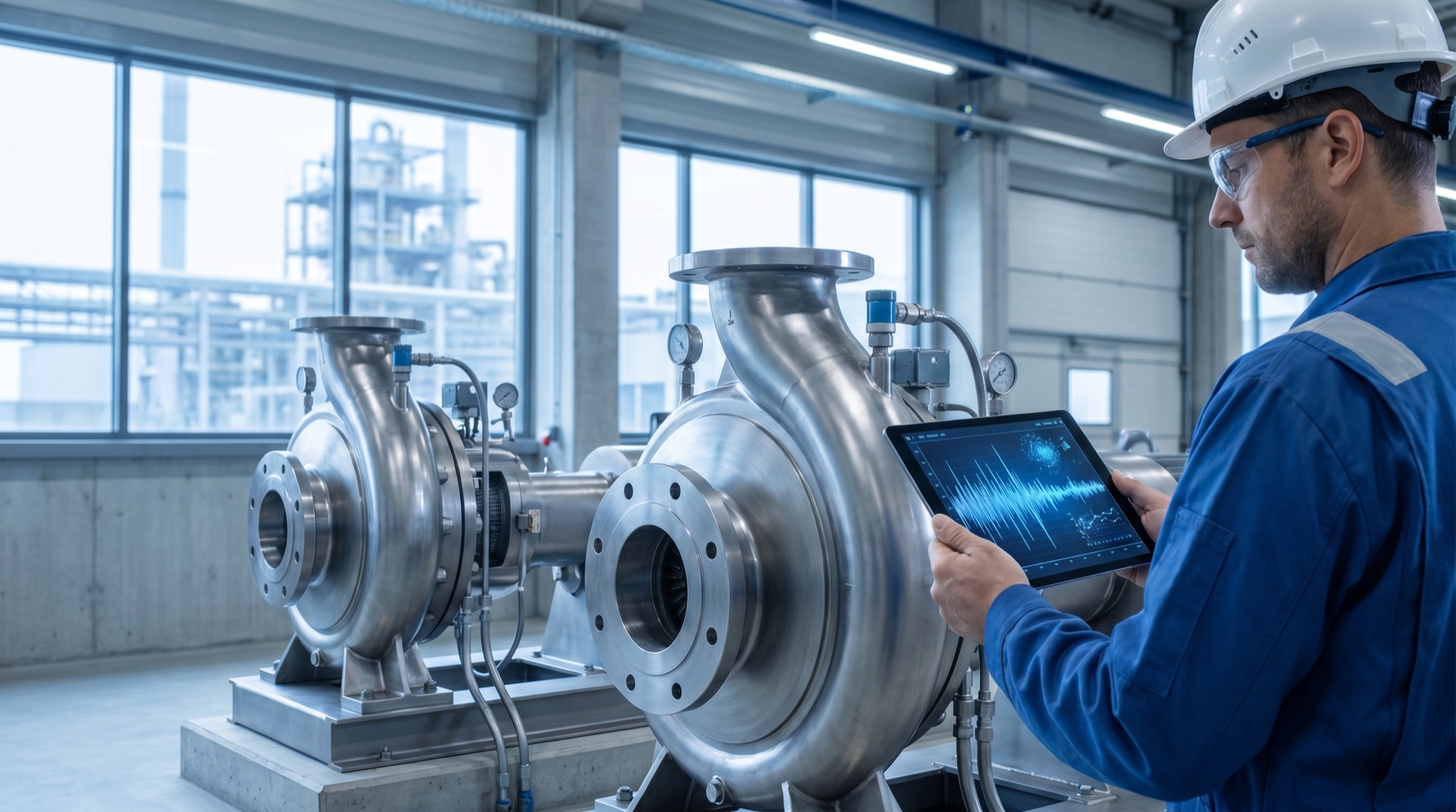
Real-Time Sensors vs. Laboratory Analysis: A Practical Comparison
| Factor | Real-Time Sensing (Tan Delta / NIR) | Laboratory Analysis |
|---|---|---|
| Response time | Seconds, continuous trending and alarms | Days to weeks, including shipping and queue time |
| Coverage | 100 per cent of operating time | Snapshots at the sampling interval only |
| Depth of detail | Holistic condition index and trend direction | Detailed breakdown of wear metals, additive chemistry and particle counts |
| Best use | Early warning, closed-loop control, remote assets | Root-cause confirmation and lubricant qualification |
| Ongoing labour | Minimal after installation | Recurring sampling labour on every asset |
The two approaches are complements, not competitors. A proven practice is to monitor continuously and trigger a laboratory sample only when the sensor flags a developing problem, turning the lab from a routine cost into a targeted diagnostic tool.
Moisture Monitoring and Oil Sensing by Industry
Mining
Mining operations run some of the most heavily loaded gearboxes, mills, crushers and hydraulic systems in Canadian industry, often at remote sites where a failed drivetrain can idle production for days. Real-time oil condition monitoring on grinding-mill gearboxes, conveyor drives and mobile fleets provides early warning long before catastrophic failure, making it a natural first deployment in a site-wide reliability program. NIR moisture measurement also earns its keep on concentrates and bulk materials, where moisture affects handling, winter freezing and transport costs. Remote sites frequently pair these sensors with plant-wide radio networks, see our guide to wireless communication for mining and petrochemical sites.
Food and Beverage
In food plants, moisture is a direct quality, yield and safety parameter. Continuous NIR measurement at dryers, roasters and extruders keeps finished product inside specification while maximizing saleable weight. Meanwhile, the mixers and conveyors behind those lines depend on lubricants whose condition deserves the same attention as any heavy-industry asset. CTH supports food and beverage operations with instrumentation for both sides of that equation.
Petrochemical
Refineries and chemical plants depend on large compressors, turbines and pump trains where lubricant failure carries safety as well as production consequences. Continuous oil monitoring on these critical machines complements the protective instrumentation already common in petrochemical processing applications. Where equipment sits in classified locations, see our guide to hazardous area classifications, zones and protection methods for the selection fundamentals.
Building Oil and Moisture Data into Your Predictive Maintenance Program
Oil quality and moisture sensors deliver the most value when their outputs join the rest of your condition-monitoring data. Three integration steps make the difference:
- Correlate with vibration. Rising oil contamination combined with rising vibration on the same machine is a far stronger failure indicator than either signal alone. Our cluster on vibration analysis for pump protection covers the mechanical side of this pairing.
- Record and trend. Routing sensor outputs into plant recorders and controllers creates the historical record that turns raw readings into actionable trends, and supports audits, as discussed in our guide to advanced process controllers and data recording for compliance.
- Set staged alarms. A two-level approach, an early advisory threshold for planning and a higher threshold for action, lets maintenance planners schedule interventions during planned outages instead of reacting to emergencies.
For the broader framework, including how to prioritize assets, justify the investment and phase a plant-wide rollout, return to our pillar guide on predictive maintenance and process automation strategies, which ties oil analysis, vibration, data recording and wireless communication into a single roadmap.
Frequently Asked Questions
What is oil condition monitoring and how does it work?
Oil condition monitoring is the continuous measurement of lubricant health using in-line sensors in the lubrication or hydraulic circuit. Technologies such as tan delta sensing track changes in the oil’s dielectric properties caused by water, oxidation, wear debris and additive depletion, reporting a live condition index so problems are caught as they develop.
How does an oil quality sensor differ from routine laboratory oil analysis?
An oil quality sensor measures continuously and alarms in real time, while laboratory analysis delivers a detailed chemical breakdown of one sample days or weeks later. Most programs use both: the sensor provides constant early warning, and the lab confirms root cause when the sensor flags a change.
Where is industrial moisture monitoring with NIR sensors used?
NIR moisture monitoring is used wherever moisture content drives quality, yield or handling: food and beverage drying lines, snack and powder production, grain handling, wood products, mineral concentrates and chemical solids. Because it is non-contact, it works on moving product at conveyors and dryer discharges without interrupting production.
How much water in lubricating oil is too much?
There is no universal threshold, acceptable moisture depends on the lubricant formulation, equipment design and operating temperatures. Even small amounts of dissolved water measurably reduce bearing life, so trend moisture continuously, watch for step changes, and consult your lubricant supplier and equipment manufacturer for asset-specific limits.
Can oil condition sensors be installed on remote mining equipment in Canada?
Yes. Compact in-line sensors suit mobile fleets and remote fixed plant, and their outputs can travel over industrial wireless networks to a central maintenance system, a common configuration at Canadian mine sites where assets are spread across large properties and frequent manual sampling is impractical.
Request an Application Engineering Consultation
Selecting the right oil quality sensor or industrial moisture monitoring system depends on your fluid, your material, your process conditions and your environment. The application engineering team at CTH Industrial Controls helps mining, food and beverage, and petrochemical operations across Quebec and Canada match the right technology, drawn from the manufacturers CTH carries, including Tan Delta and MoistTech, to each measurement challenge. Request an application engineering consultation today and put real-time condition data to work protecting your equipment and your product.