



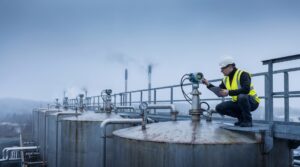

Across petrochemical complexes, mines and chemical processing plants in Quebec and across Canada, certain locations contain flammable gases, vapours or combustible dusts in concentrations that could ignite. Hazardous area classification is the engineering discipline of mapping where, and how often, those explosive atmospheres occur, so that every instrument, junction box and network device installed there is prevented from becoming an ignition source. This guide introduces the two classification frameworks used in Canada, the Class/Division system and the Zone system, and compares the principal protection methods available to instrumentation engineers, including intrinsic safety barriers, explosion proof enclosures and purged or pressurized systems. It forms part of our complete guide to instrumentation for hazardous areas and extreme environments, which covers measurement and protection strategies for the most demanding industrial settings.
Why Hazardous Area Classification Matters
In Canada, electrical installations in explosive atmospheres are governed by the Canadian Electrical Code (CEC), published by CSA Group, together with provincial regulations and the requirements of the local authority having jurisdiction. At a general level, the code requires that areas where flammable substances may be present be formally classified, and that equipment installed in those areas carry certification appropriate to the hazard. Classification drives every downstream decision, from equipment selection and wiring methods to maintenance procedures and inspection regimes, so it is performed by qualified engineers during plant design and revisited whenever a process changes. Because code requirements evolve, always verify current obligations directly with CSA Group, the CEC and your inspection authority rather than relying on any summary, including this one.
The consequences of misclassification cut both ways. Under-classifying an area creates a genuine ignition risk for personnel and assets, while over-classifying inflates capital and maintenance costs by imposing protective measures where none are required. The challenge spans many sectors: petrochemical refineries and terminals handle flammable hydrocarbons, underground and surface mines contend with methane and combustible dusts, and chemical batching plants manage solvents and reactive vapours. Even pulp and paper mills and food and beverage plants face combustible dust hazards from wood fibre, flour and sugar, which is why CTH Industrial Controls supports sector-specific instrumentation selection across all of these industries.
Class/Division and Zone Systems: Two Ways to Map the Same Risk
The Class/Division System
The traditional North American approach groups hazards by material type and by likelihood of presence. Class I covers flammable gases and vapours, Class II covers combustible dusts, and Class III covers ignitable fibres and flyings. Division 1 designates areas where the hazardous atmosphere is present during normal operation, while Division 2 designates areas where it appears only under abnormal conditions such as a leak or an equipment failure. Material groups further refine the classification according to how easily a given gas or dust ignites, and temperature codes limit how hot an equipment surface may become.
The Zone System
The Zone system, aligned with international IEC practice, divides gas and vapour hazards into three levels of probability: Zone 0, where an explosive atmosphere is present continuously or for long periods; Zone 1, where it is likely to occur during normal operation; and Zone 2, where it is unlikely and short-lived if it occurs at all. Combustible dust areas follow a parallel scheme of Zones 20, 21 and 22. Canadian practice has moved toward Zone classification for newer gas and vapour installations, while many established facilities continue to operate under Division-based classification. Your engineering team and inspection authority will confirm which framework applies to a given site.
| Aspect | Class/Division System | Zone System |
|---|---|---|
| Origin | Traditional North American practice | International, IEC-aligned practice |
| Risk levels for gases and vapours | Two (Division 1 and Division 2) | Three (Zones 0, 1 and 2) |
| Highest-risk category | Division 1 | Zone 0 |
| Combustible dust hazards | Class II and Class III with Divisions | Zones 20, 21 and 22 |
| Typical Canadian application | Common in many existing facilities | Favoured for newer gas and vapour installations |
Protection Methods: Intrinsic Safety Barriers and Explosion Proof Enclosures
Once an area is classified, the instrumentation engineer selects a protection method that prevents ignition by design. Three approaches dominate process measurement and control work, and most large facilities use a combination of all three.
Intrinsic Safety: Limiting Energy at the Source
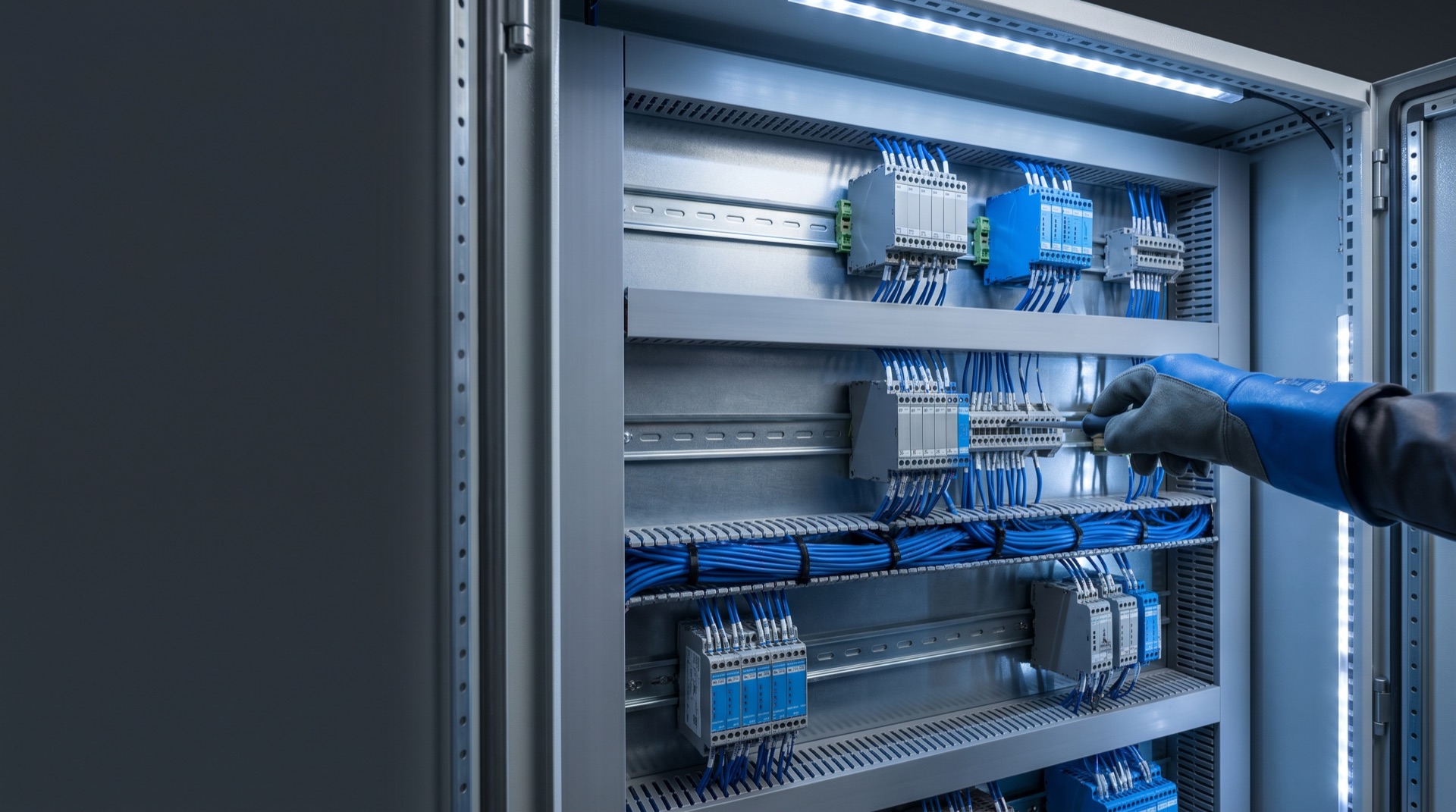
Intrinsic safety keeps the electrical energy in field circuits below the level needed to ignite the surrounding atmosphere, even under fault conditions. The classic implementation is the Zener barrier, a compact device mounted in the safe area that clamps voltage and limits the current flowing out to the field instrument. CTH stocks a full range of intrinsically safe Zener barriers for analogue, digital and thermocouple signals, along with galvanically isolated interfaces that remove the need for a dedicated high-integrity earth. Much of this portfolio comes from MTL, a name long associated with intrinsic safety engineering; browse our MTL intrinsic safety category for isolators, barriers and accessories. As plants digitalize, intrinsically safe Ethernet hardware now extends high-bandwidth networking into classified areas, supporting Ethernet-APL and smart instrumentation strategies. A practical advantage of intrinsic safety is maintainability: because the circuit cannot release incendive energy, live diagnostic work on the loop is often permissible under site procedures that would otherwise demand gas testing and permits.
Explosion Proof Enclosures: Containing the Ignition
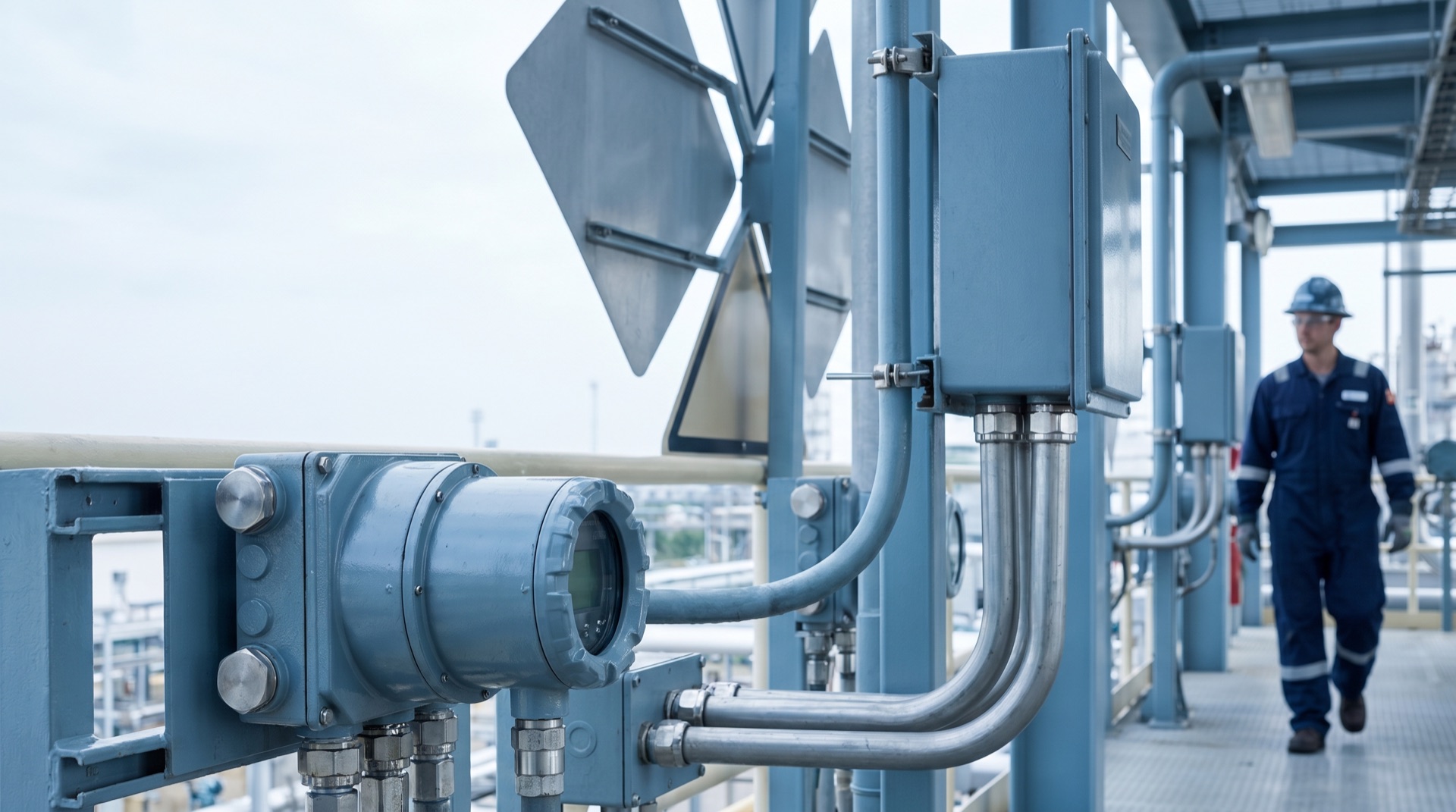
Explosion proof enclosures, called flameproof in Zone terminology, take the opposite approach. The enclosure assumes an internal ignition may occur and is engineered to contain the resulting pressure while cooling any escaping hot gases through tightly machined flame paths, so the surrounding atmosphere is never ignited. This method suits higher-power equipment, including motors, large transmitters, solenoids and switchgear, that cannot practically be made intrinsically safe. The trade-offs are weight, cost and operating discipline: covers generally must not be opened while the equipment is energized, so routine work requires isolation or permits. Conduit seals and certified cable glands are essential to preserving the integrity of the protection.
Purged and Pressurized Systems
Purge and pressurization protects equipment by maintaining a positive pressure of clean air or inert gas inside an enclosure, preventing the surrounding flammable atmosphere from ever reaching internal components. Purge and pressurization (Ex p) maintains a protective gas pressure inside an enclosure so that standard equipment can operate in a classified area; it is widely applied to analyzer shelters, control cabinets, large displays and motors. This method is especially attractive when standard, general-purpose electronics must operate inside a classified zone, because the protection is provided by the purge system rather than by redesigning the equipment itself.
Selecting the Right Protection Method
- Severity of the classified area: locations where the hazard is present continuously demand methods certified for the highest risk levels; intermittent hazards open up more options.
- Signal and power levels: low-energy 4-20 mA, HART and fieldbus loops are natural candidates for intrinsic safety barriers, while high-power loads generally point to explosion proof enclosures or pressurization.
- Maintenance philosophy: intrinsically safe circuits can simplify routine calibration and troubleshooting; flameproof equipment imposes stricter work procedures.
- Lifecycle cost: weigh certification upkeep, spares, purge gas consumption and inspection effort alongside purchase price.
Beyond classification, specifying intrinsic safety means selecting a complete, certified bill of materials. Our Eaton MTL intrinsic safety range covers barriers, isolators, surge protection and signal conditioning for instrumentation in classified environments, from the marshalling cabinet to the field device.
Hazardous area protection rarely stands alone. Classified sites also depend on industrial gas detection to protect personnel in confined spaces, on extreme temperature measurement with infrared sensors and ruggedized thermocouples, and, in mining, on laser sensors for precision distance measurement in harsh environments.
Frequently Asked Questions
What is the difference between Zone 0, Zone 1 and Zone 2?
The three Zones rank how probable an explosive gas atmosphere is. Zone 0 means it is present continuously or for long periods, such as the vapour space inside a solvent tank. Zone 1 means it is likely during normal operation, for example around vents and seals. Zone 2 means it is unlikely and brief, typically only after an abnormal event such as a leak. Equipment must be certified for the most severe Zone in which it is installed.
Can Division-rated equipment be used in a Zone-classified area in Canada?
In some cases the Canadian Electrical Code permits equipment certified under one system to be installed in areas classified under the other, but the rules depend on the specific risk levels and certifications involved. Never assume equivalence: confirm acceptability with the equipment certification documents, the CEC and your authority having jurisdiction before installation.
How does an intrinsic safety barrier work?
An intrinsic safety barrier sits between the safe-area control system and the field instrument. A Zener barrier uses Zener diodes to clamp voltage, a fuse to interrupt fault energy and a resistor to limit current, ensuring that even a short circuit or component failure in the field cannot release a spark or surface temperature capable of igniting the atmosphere. Galvanically isolated barriers achieve the same energy limitation using transformers or opto-isolation, without requiring a high-integrity earth connection.
When should I choose explosion proof enclosures instead of intrinsic safety?
Choose explosion proof enclosures when the equipment needs more electrical power than intrinsic safety can deliver, such as motors, heaters, large displays or switching devices. Intrinsic safety is generally the preferred route for low-power measurement loops because of its simpler live-working provisions, while purged and pressurized systems bridge the gap for complex electronics like analyzers and computer cabinets.
Who is responsible for hazardous area classification at a facility?
Area classification is an engineering deliverable, typically prepared by qualified process and electrical engineers using recognized codes and standards, documented in classification drawings and reviewed with the local inspection authority. Instrument suppliers like CTH work from that classification to recommend appropriately certified equipment; they do not replace the formal classification study itself.
Getting the classification right is the foundation; matching it with the right protection method is where projects succeed or stall. To see how intrinsic safety, flameproof equipment and pressurization fit into the bigger measurement picture, return to our pillar guide on hazardous area instrumentation for extreme environments.
Request an Application Engineering Consultation
Specifying instrumentation for classified areas means reconciling area classification drawings, certification paperwork and process requirements, and CTH Industrial Controls’ application engineers do this every day for petrochemical, mining and chemical clients across Quebec and Canada. We represent specialist manufacturers of hazardous area and process instrumentation, including Eaton MTL intrinsic safety barriers, isolators and surge protection, and can help you build a compliant, cost-effective bill of materials. Request an application engineering consultation to review your hazardous area requirements with our team.