






Industrial flow meters are among the most consequential instruments in any process facility. Whether you are batching chemicals to a recipe, billing a municipality for treated water or transferring hydrocarbons between pipeline operators, the flow meter is effectively the cash register of the operation. A measurement error of even half a percent, multiplied across millions of litres per year, translates directly into lost product, disputed invoices or off-specification batches. This guide expands our original flow meter selection guide for Quebec into a permanent reference hub covering how each technology works, what custody transfer flow measurement demands in Canada, and how to match a meter to your fluid, line size and accuracy target.
CTH Industrial Controls has supplied industrial flow measurement instrumentation to plants across Quebec, Ontario and the Maritimes, with application engineering support behind every recommendation. Use the table of contents below to jump straight to the section that matches your application.
Table of Contents
- Why Flow Measurement Accuracy Matters
- Industrial Flow Meters: The Five Core Technologies
- Custody Transfer Flow Measurement in Canada
- How to Choose the Right Flow Meter
- Sourcing Industrial Flow Meters in Quebec and Across Canada
- Verification and Portable Flow Measurement
- Explore the Complete Flow Measurement Series
- Frequently Asked Questions
- Request an Application Engineering Consultation
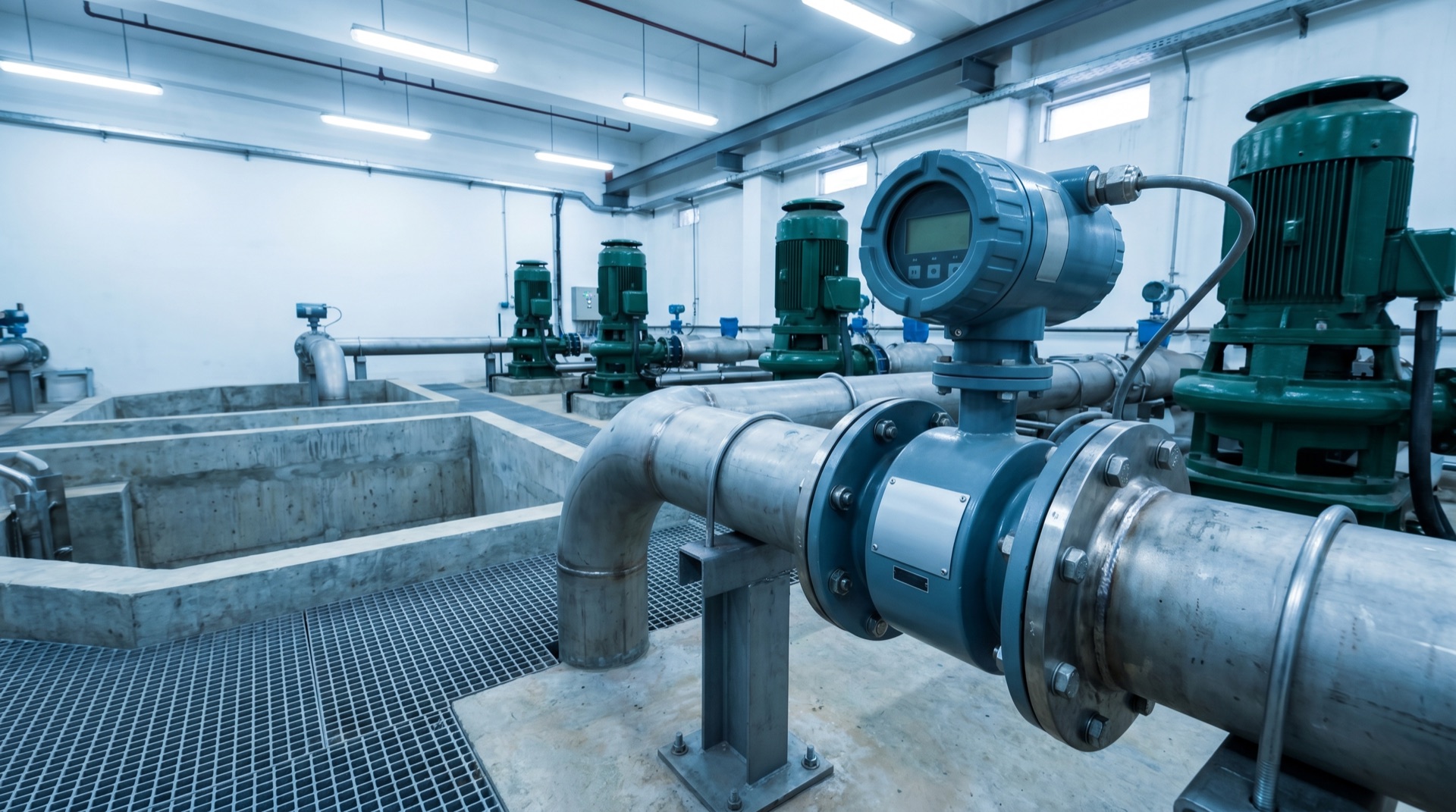
Why Flow Measurement Accuracy Matters
Flow is the one process variable that almost always carries a dollar value. Level and pressure tell you about the state of a vessel; flow tells you how much product moved, and in most plants that number feeds directly into billing, inventory reconciliation, batch records or regulatory reporting. The consequences of poor flow measurement scale with the value of the fluid: a few percent of error on a cooling water line is an annoyance, while the same error on a hydrocarbon pipeline or a pharmaceutical-grade additive stream is a serious commercial and compliance problem.
Three distinct accuracy regimes drive meter selection across the industries CTH serves:
- Process control: repeatability matters more than absolute accuracy. The control loop needs a stable, fast signal, so a vortex or magnetic meter with good repeatability is often ideal.
- Batching and blending: absolute accuracy on totalized quantity is what counts, because each batch is a discrete financial and quality event. This is where Coriolis mass flow measurement dominates.
- Custody transfer and fiscal metering: the measurement is the basis of payment between two parties, so accuracy, proving, traceability and regulatory acceptance all apply at once.
Understanding which regime your application falls into is the single most useful step you can take before comparing technologies, because it determines how much accuracy you actually need to pay for.
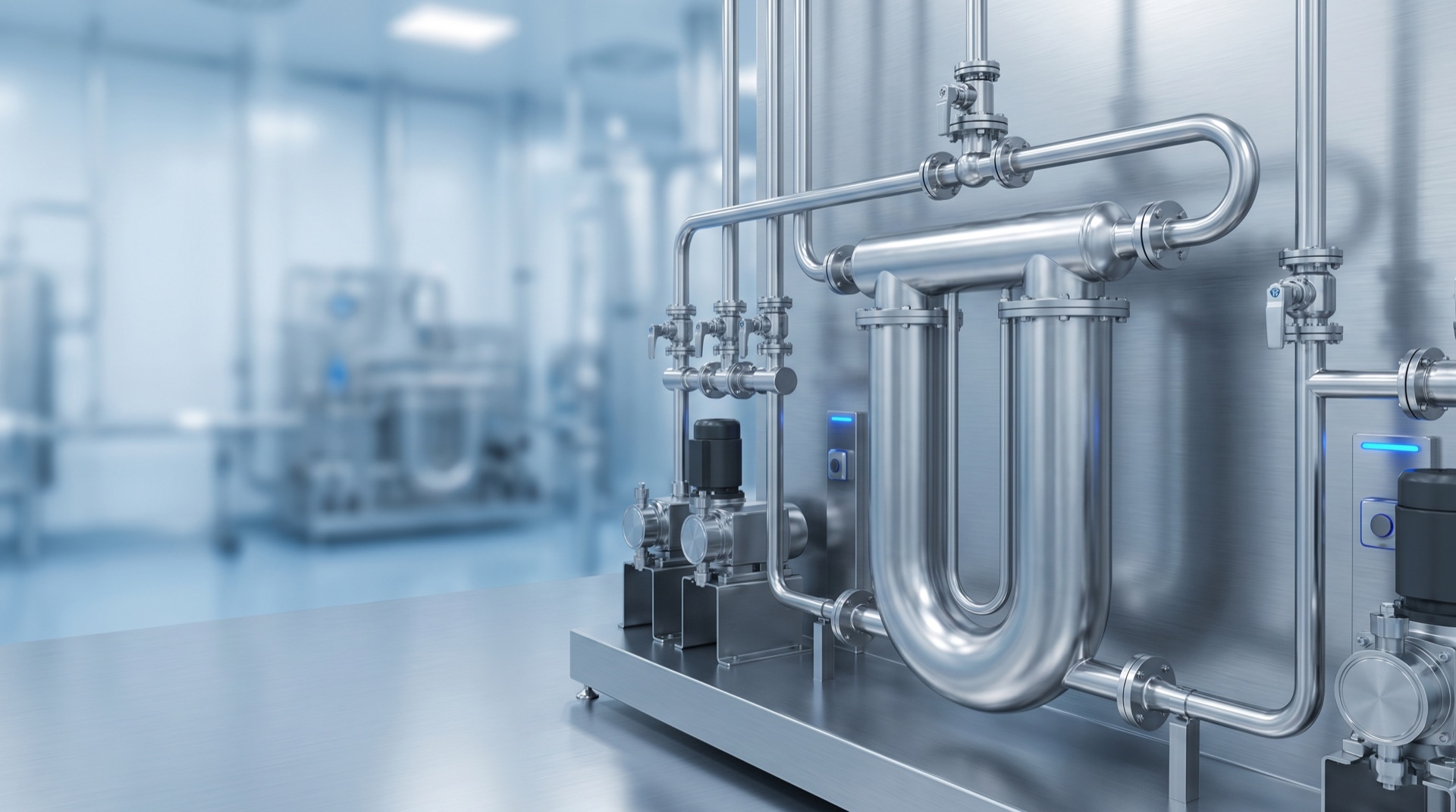
Industrial Flow Meters: The Five Core Technologies
Hundreds of flow meter models compete for attention, but nearly all of them rely on one of five measurement principles. The comparison below summarizes where each technology fits; the sections that follow, and the dedicated guides linked from each one, go deeper into selection, sizing and installation practice.
| Technology | What It Measures | Relative Accuracy | Best Suited For | Key Limitations |
|---|---|---|---|---|
| Magnetic (electromagnetic) | Volumetric flow of conductive liquids | Very good | Water, wastewater, slurries, chemical dosing, pulp stock | Liquid must be electrically conductive; no gas or steam |
| Coriolis | Mass flow, plus density and temperature | Excellent (highest of common technologies) | Chemical batching, high-value fluids, custody transfer of liquids | Higher purchase cost; pressure drop in some sizes; large line sizes get expensive |
| Vortex | Volumetric flow of steam, gas and clean liquids | Good | Steam, compressed air, gas, utility liquids | Needs minimum flow velocity; sensitive to upstream piping disturbances |
| Ultrasonic (transit-time / Doppler) | Volumetric flow of liquids and gases | Good to excellent (multi-path) | Pipelines, custody transfer, large lines, clamp-on verification | Transit-time needs acoustically clean fluid; Doppler needs particles or bubbles |
| Differential pressure (orifice, cone, pitot) | Volumetric flow inferred from pressure drop | Good (with compensation) | Steam and gas, high temperature, well-understood standards | Square-root signal limits turndown; permanent pressure loss |
Magnetic Flow Meters: The Workhorse for Conductive Liquids
Electromagnetic flow meters apply Faraday’s law of induction: a conductive liquid moving through a magnetic field generates a voltage proportional to its velocity. Because the measurement happens across the full pipe bore with no moving parts and no pressure drop, magmeters are the default choice for water, wastewater, chemical dosing and pulp and paper stock lines. Liner and electrode material selection is what separates a ten-year installation from a premature failure, particularly on abrasive slurries and aggressive chemicals. CTH stocks and supports magnetic flowmeters including the Foxboro 9100 and 9200A series, covering line sizes from small dosing lines up to very large municipal mains. For a full treatment of liner selection, grounding rings, sizing for slurry service and municipal practice, see our guide to magnetic flow meters for wastewater and slurries, which is especially relevant to pulp and paper and municipal operations.
Coriolis Mass Flow Meters: Direct Mass Measurement and the Accuracy Benchmark
Coriolis meters measure mass flow directly by detecting the twist that moving fluid imposes on vibrating tubes. Because they respond to mass rather than volume, they are immune to changes in density, temperature and pressure that degrade volumetric technologies, and they deliver density and temperature as bonus process variables from the same instrument. This makes Coriolis flowmeters the benchmark for chemical batching, blending and high-value fluid transfer. A Foxboro Coriolis flow meter such as the CFT-series transmitter paired with the appropriate flow tube gives chemical and food and beverage plants recipe-grade accuracy plus a live density reading for concentration monitoring. Our dedicated guide to Coriolis mass flow measurement for chemical batching covers sizing, pressure drop trade-offs and how to use density as a quality variable, and the full range of mass flow measurement instruments CTH supplies is available online.
Vortex Flow Meters: Steam, Gas and Utility Liquids
Vortex meters count the frequency of vortices shed by a bluff body placed in the flow stream, a frequency that is linearly proportional to velocity over a wide range. With no moving parts and excellent tolerance for high temperatures, vortex technology is the natural first choice for saturated and superheated steam, compressed air and many gas flows. Foxboro vortex flowmeters offer wide rangeability, on the order of 80:1, and a replaceable sensor design that avoids recalibration after service, which matters in steam systems where sensor access is a maintenance event. Browse the vortex flowmeters CTH carries, and read our companion guide to steam and gas flow measurement with vortex and DP cone meters for guidance on pressure and temperature compensation and turndown planning.
Ultrasonic Flow Meters: Pipelines, Large Lines and Clamp-On Versatility
Ultrasonic meters come in two distinct families. Transit-time designs measure the difference in travel time of sound pulses with and against the flow, and in multi-path inline configurations they achieve the accuracy needed for hydrocarbon pipeline service, and clamp-on versions measure non-invasively from the pipe exterior, with Pulsar Greyline clamp-on meters widely used for this work. Doppler designs reflect sound off particles or bubbles in the fluid, making them well suited to wastewater and slurries that would defeat transit-time meters. Clamp-on versions of both mount on the outside of the pipe, which makes them invaluable for retrofit measurement and for verifying installed meters without breaking into the line. The Greyline PDFM 5.1 portable Doppler flow meter is a popular verification and survey tool for exactly this reason. Our guide to clamp-on ultrasonic flow meters for pipelines covers transit-time and Doppler sensing, installation effects and portable verification in depth.
Differential Pressure Meters: Orifice Plates, Cone Meters and Pitot Tubes
The oldest flow measurement principle is still one of the most widely used: place a restriction in the line, measure the pressure drop across it, and infer flow from well-established physics. Orifice plates, venturis, averaging pitot tubes and cone meters all belong to this family. DP measurement shines in steam and gas service at high temperature and pressure, where decades of standards work make the technology predictable and auditable. Its main weaknesses are the square-root relationship between flow and differential pressure, which limits turndown, and permanent pressure loss. Cone meters mitigate the straight-run requirements of orifice plates and are covered alongside vortex technology in our steam and gas flow measurement guide.

Custody Transfer Flow Measurement in Canada
Custody transfer, sometimes called fiscal metering, is flow measurement used as the basis of payment when product changes hands: crude oil between a producer and a pipeline, refined product at a terminal, natural gas at a city gate, or treated water sold between municipalities. Because money changes hands on the meter reading, custody transfer flow measurement is held to a far higher standard than ordinary process measurement, in four ways:
- Accuracy and linearity: the meter must hold tight performance across the full operating envelope, from minimum to maximum flow.
- Proving and verification: custody meters are periodically proved against a traceable reference, such as a prover loop or master meter, and correction factors are documented.
- Regulatory acceptance: in Canada, trade measurement falls under Measurement Canada, which administers approval and inspection requirements for devices used in buying and selling. Requirements vary by commodity and application, so operators should always confirm the current approval status of a specific meter model with Measurement Canada or their measurement consultant before committing to a design.
- Auditability: flow computers, data records and seal integrity all need to withstand third-party audit. Operators pairing meters with recorders and controllers can consult our guide to process controllers and data recording for compliance.
Technology-wise, liquid hydrocarbon custody transfer today is dominated by multi-path ultrasonic meters and Coriolis meters, with turbine and positive displacement meters still common in legacy installations. Cameron flow measurement products have a long pedigree in pipeline measurement, and CTH supports Canadian operators specifying them for petrochemical and pipeline applications. For a deeper discussion of multi-path transit-time technology, meter run design and verification strategy, see our cluster guide on clamp-on ultrasonic flow meters for pipelines.
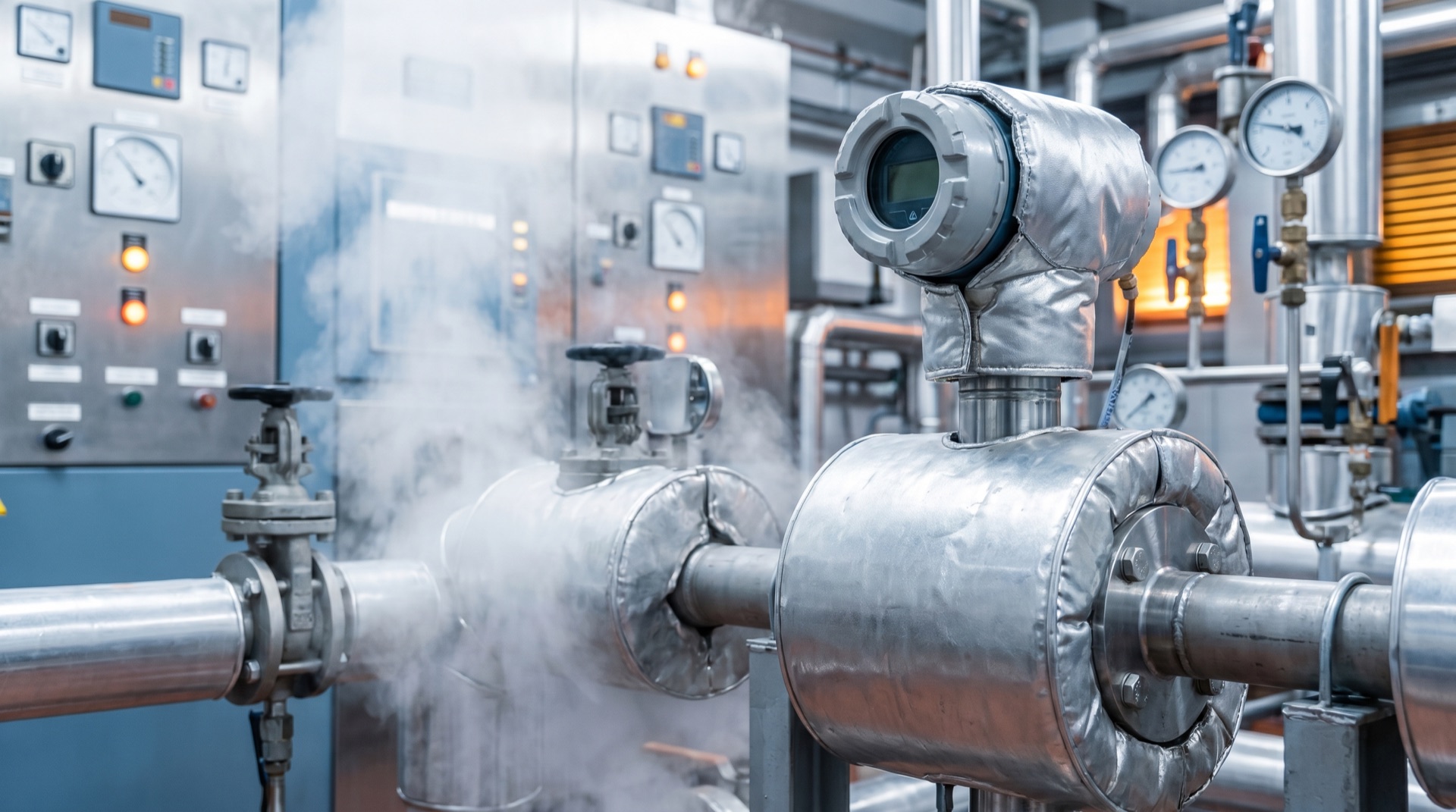
How to Choose the Right Flow Meter
Most flow meter problems trace back to a selection mistake, not an instrument failure. Working through the following criteria in order will eliminate unsuitable technologies quickly and surface the real trade-offs:
- Fluid type and condition. Liquid, gas, steam or slurry? Clean or dirty? Conductive or non-conductive? A magnetic meter is eliminated instantly by a non-conductive hydrocarbon; a transit-time ultrasonic meter struggles with heavy solids that a Doppler or magmeter handles easily.
- Mass or volume? If your recipe, inventory or contract is written in mass units, measuring volume and converting via an assumed density adds error. Choose direct mass flow measurement with Coriolis where the economics justify it.
- Accuracy regime. Control, batching or custody transfer, as discussed above. Specify accuracy as a percentage of rate, not full scale, and be honest about what the application actually requires.
- Line size and material. Coriolis costs escalate rapidly above mid-range line sizes, while magnetic and ultrasonic meters scale economically to very large mains. Lined or non-metallic pipe affects clamp-on ultrasonic feasibility.
- Process conditions. Temperature, pressure, viscosity and the possibility of two-phase flow or entrained gas all narrow the field. Steam eliminates magmeters; entrained gas degrades Coriolis and transit-time performance.
- Installation constraints. Available straight pipe run upstream and downstream is the most commonly violated requirement. Vortex, orifice and single-path ultrasonic meters need conditioning lengths; cone meters and Coriolis are far more forgiving.
- Hazardous area classification. Electrically classified areas require appropriately certified transmitters and wiring methods. Our pillar guide to instrumentation for hazardous areas and extreme environments explains zones, divisions and protection methods.
- Maintenance and verification access. Consider how the meter will be proved, verified or serviced over a 15-year life, long after day-one installation.
If you are also reviewing tank gauging and inventory measurement as part of the same project, our companion pillar on industrial level measurement technologies follows the same selection-first approach for level instruments.
Sourcing Industrial Flow Meters in Quebec and Across Canada
Specifying the right technology is only half the job; the other half is buying it from a supplier who can support the application locally. CTH Industrial Controls supplies industrial flow meters in Quebec and ships mass flow meters across Canada, backed by application engineering rather than catalogue order-taking. That distinction matters most on the difficult ten percent of applications: abrasive slurries, low-conductivity chemicals, steam at the edge of a vortex meter’s velocity range, or a custody transfer skid that must satisfy both the process engineer and the auditor.
CTH is an authorized distributor for Foxboro (Schneider Electric) instrumentation, whose flow line spans magnetic, Coriolis and vortex technologies. A Foxboro flowmeter specified through CTH comes with help on sizing, configuration and commissioning, and with continuity of support when the plant expands or the process changes. Alongside Foxboro, CTH represents Cameron for pipeline and custody measurement and a broad roster of complementary instrumentation manufacturers; the full line card is on our manufacturers and control instruments page. Whether the requirement is a single replacement magmeter for a Montreal-area water plant or a fleet of mass flow meters for a chemical site, the goal is the same: the right meter, configured correctly, supported for its full service life.
Verification and Portable Flow Measurement
Even a perfectly selected meter needs periodic confirmation that it is still telling the truth. Full proving against a traceable reference is the gold standard for custody transfer, but for process meters a portable clamp-on check measurement is often the most practical verification tool. A portable transit-time unit verifies clean-liquid meters without breaking containment, while a portable Doppler instrument such as the Greyline PDFM 5.1 portable Doppler flow meter handles wastewater, sludges and other acoustically dirty fluids where transit-time signals fail. Maintenance teams use these portable surveys to settle disputes between installed meters, to confirm pump performance and to spot-check lines that have no permanent meter at all.
Verification data is only useful if it is recorded and trended. Plants building a condition-based maintenance program around their instrumentation will find our pillar guide to predictive maintenance and process automation a natural next read, since flow anomalies are often the first visible symptom of pump wear or fouling.
Explore the Complete Flow Measurement Series
This hub is supported by four in-depth application guides. Each one drills into a specific technology and industry context:
- Magnetic Flow Meters for Wastewater and Slurries: Selection Guide covers liner and electrode selection, grounding, sizing for slurry velocity and municipal metering practice.
- Coriolis Mass Flow Measurement for Chemical Batching explains how to achieve batching-grade accuracy, use density as a bonus variable and manage pressure drop.
- Clamp-On Ultrasonic Flow Meters for Pipelines examines transit-time and Doppler sensing, installation factors and portable clamp-on verification.
- Steam and Gas Flow Measurement: Vortex and DP Cone Meters addresses high-temperature service, pressure and temperature compensation and turndown.
Frequently Asked Questions
What is the most accurate type of industrial flow meter?
For liquids, Coriolis mass flow meters are generally regarded as the most accurate commonly available technology, because they measure mass directly and are unaffected by density and temperature changes. Multi-path transit-time ultrasonic meters approach similar performance on large pipelines. The right answer still depends on the fluid: the most accurate technology on paper performs poorly if the fluid violates its assumptions, which is why selection should start with fluid properties rather than headline accuracy figures.
What flow meters are used for custody transfer in Canada?
Liquid hydrocarbon custody transfer typically uses multi-path ultrasonic or Coriolis meters, with turbine and positive displacement meters in older installations; gas custody transfer commonly uses ultrasonic and orifice metering. Devices used in trade measurement in Canada fall under Measurement Canada requirements, which differ by commodity and application, so always verify the approval status of a specific model with Measurement Canada before specifying it for fiscal duty.
What is a Foxboro flowmeter and who supports them in Quebec?
Foxboro is the process instrumentation brand of Schneider Electric, with a flow line that includes magnetic flowmeters such as the 9100 and 9200A series, Coriolis mass flow meters and vortex meters for steam and gas. CTH Industrial Controls supports Foxboro flowmeter selection, sizing and commissioning for customers in Quebec and across Canada through its Foxboro (Schneider Electric) product line.
Can a portable Doppler flow meter verify an installed flow meter?
Yes, within limits. A portable Doppler instrument like the Greyline PDFM 5.1 clamps onto the outside of the pipe and measures flow by reflecting ultrasound off particles or bubbles, making it ideal for quick checks on wastewater, sludge and slurry lines. It is a verification and troubleshooting tool rather than a custody-grade reference: agreement between the portable unit and the installed meter builds confidence, while disagreement tells you where to investigate further.
Do magnetic flow meters work on all liquids?
No. Electromagnetic flow meters require the liquid to be electrically conductive, which excludes hydrocarbons, solvents and demineralized water in many cases. For conductive fluids, including very dirty ones, they are outstanding; for non-conductive fluids, Coriolis, ultrasonic, vortex or DP technologies are the appropriate alternatives. Our magnetic flow meter selection guide covers conductivity limits and liner choices in detail.
Request an Application Engineering Consultation
Every flow application has at least one detail that does not appear on the datasheet: an unusual fluid, a tight straight-run budget, a custody requirement or a maintenance constraint. CTH Industrial Controls offers application engineering consultations to help you compare technologies, size the meter correctly and specify the right options the first time, drawing on the full range of manufacturers CTH represents, including Foxboro (Schneider Electric) and Cameron. Request an application engineering consultation and tell us about your fluid, line size and accuracy target; we will respond with a grounded engineering recommendation.