





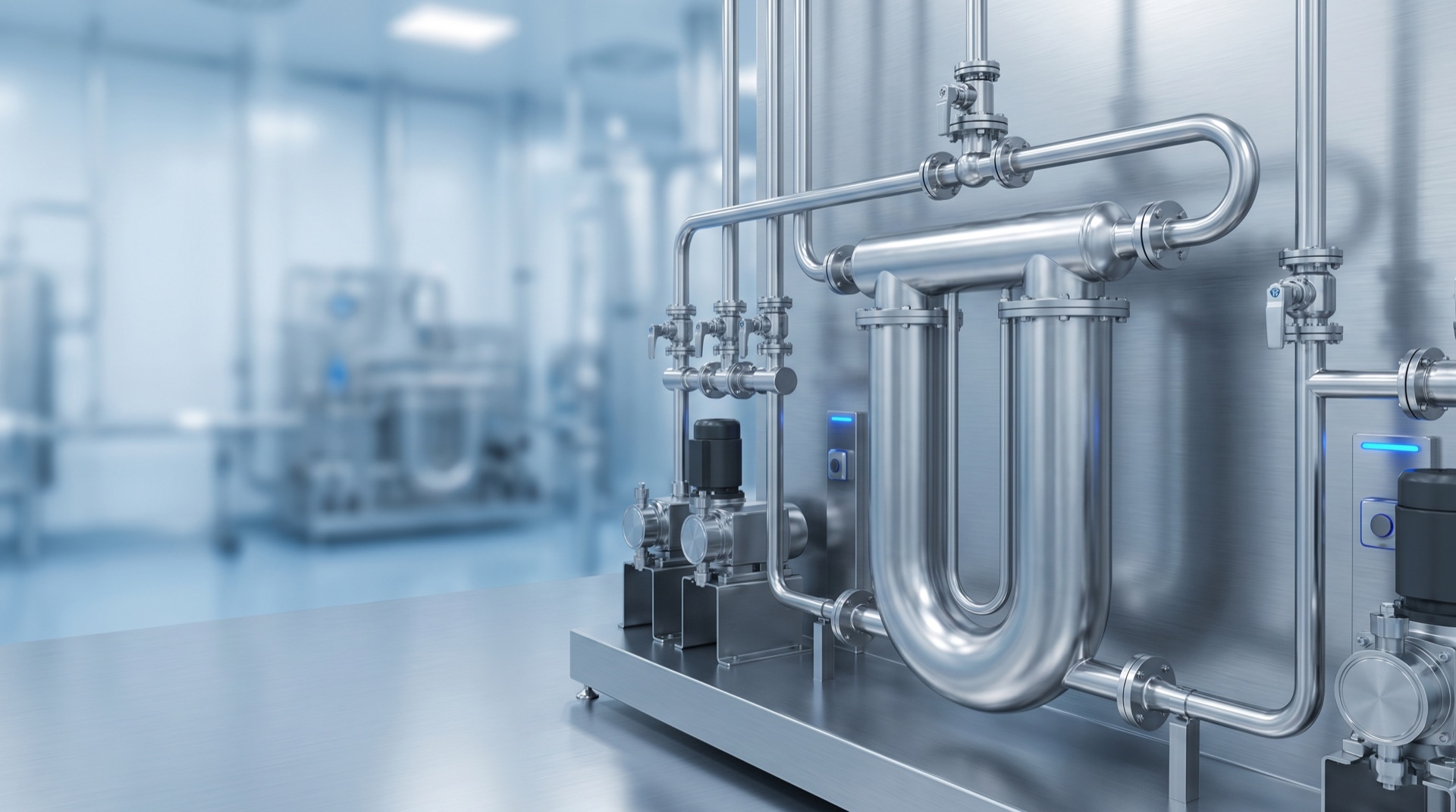
When a batch recipe calls for 500 kilograms of a reactant, a volumetric meter can only infer the answer. Volume shifts with temperature, pressure and composition; mass does not. That is why the Coriolis mass flow meter has become the reference instrument for chemical batching, blending and high-value fluid transfer in Canadian processing plants. This article, part of our complete guide to industrial flow measurement and custody transfer, explains how the technology works, why direct mass measurement improves chemical batching accuracy, how to put the built-in density measurement to work and how to size a meter without paying an unnecessary pressure-drop penalty.
How a Coriolis Mass Flow Meter Works
A Coriolis sensor contains one or two flow tubes that an electromagnetic drive coil vibrates at their natural resonant frequency. When fluid moves through the vibrating tubes, the Coriolis effect twists the inlet and outlet legs slightly out of phase with each other. Pickoff coils measure that phase shift, which is directly proportional to mass flow rate, independent of the fluid’s temperature, pressure, viscosity or conductivity.
This direct relationship is what sets the technology apart. Magnetic, ultrasonic, vortex and differential-pressure meters all measure velocity or volumetric flow and must apply a density assumption to report mass. A Coriolis meter measures mass itself, with no flow-profile dependence, minimal straight-run requirements and no rotating mechanical parts to wear.
Why Mass Flow Measurement Improves Chemical Batching Accuracy
Chemical reactions follow stoichiometry, and stoichiometry is calculated in mass. When ingredients are metered by volume, every temperature change between deliveries alters the actual mass dosed, and the error compounds across a multi-ingredient recipe. Direct mass flow measurement removes that inference entirely, which is why Coriolis meters anchor the batching skids of specialty chemical, coatings and food processing plants across Quebec and the rest of Canada.
The practical benefits appear in four places:
- Recipe fidelity. Dosing by mass keeps every batch on specification regardless of seasonal temperature swings in storage tanks and transfer lines.
- End-of-batch control. Coriolis meters respond quickly at the low dribble flows used at the end of a batch, supporting two-stage valve shutoff for a clean, repeatable cutoff.
- Reduced giveaway on high-value fluids. When product is worth dollars per litre, small systematic over-delivery during truck, tote or railcar loading adds up fast. Direct mass totalization tightens reconciliation between what was shipped and what was invoiced.
- Repeatability for quality systems. Batch records built on repeatable mass totals stand up better to customer audits and internal quality investigations.
CTH Industrial Controls supplies a full range of instruments for mass flow measurement, and our application engineers regularly help plants convert volumetric batching loops to direct mass control.
Density Measurement: The Bonus Process Variable
Because the flow tubes vibrate at their natural resonant frequency, and that frequency shifts with the mass of fluid inside them, a Coriolis meter continuously measures fluid density as a second, independent process variable at no additional installed cost. The transmitter can also combine mass flow and density to derive volumetric flow and temperature-compensated concentration values.
Plants put live density to work in several ways:
- Concentration monitoring. Density correlates with concentration in many two-component mixtures, enabling live tracking of acid strength, caustic concentration, sugar content or solids loading.
- Product interface detection. During changeovers on shared transfer lines, a density step change flags the product interface so operators can divert flush volumes precisely.
- Entrained gas alarms. A sudden density drop reveals entrained air, a cavitating pump or an emptying supply tank before an entire batch is compromised.
- Incoming material verification. Density at the unloading station confirms that the fluid in the tanker matches its certificate of analysis before it enters bulk storage.
These capabilities are especially valuable in food and beverage processing, where density-derived concentration supports the blending of syrups, juices and dairy products, and where hygienic, clean-in-place-compatible sensor designs suit sanitary service.

Sizing a Coriolis Meter and Managing Pressure Drop
Coriolis meters are sized for the application’s flow range; pipe diameter alone is a poor sizing guide. Because the measuring tubes are usually narrower than the process line, and many designs split or bend the flow path, the meter introduces more pressure drop than an equivalent length of straight pipe. Sizing is therefore a deliberate trade-off between low-flow performance and hydraulic cost.
| Sizing approach | Pressure drop | Low-flow performance | Typical application |
|---|---|---|---|
| One size below line size | Higher | Excellent | Batching and dosing where end-of-batch dribble-flow accuracy matters most |
| Matched to line size | Moderate | Good | General transfer duties with a reasonable pressure budget |
| One size above line size | Lowest | Reduced at the bottom of the range | High-capacity transfer where pump head is limited |
Keep three additional rules in mind:
- Avoid flashing and cavitation. The pressure drop through the meter must never let fluid pressure fall near its vapour pressure, or gas bubbles will disturb the tube vibration and the measurement.
- Account for viscosity. Pressure drop rises sharply with viscous fluids, so a polymer or syrup duty may need a larger sensor than the flow rate alone suggests.
- Keep the tubes full. Mounting orientation should keep the tubes liquid-full in service and allow drainage where clean-in-place protocols require it.
Accurate sizing depends on accurate fluid data: operating density, viscosity, minimum and maximum flow rates, available pump head and allowable pressure drop. Supplying these values up front lets an application engineer select the smallest sensor that still respects your hydraulic budget.
When Another Flow Technology Is the Better Fit
Coriolis delivers the strongest overall performance of any common flow technology, but it is not always the most economical choice, particularly in larger line sizes. For conductive, water-based fluids and slurries, magnetic flow meters for wastewater and slurry service offer an obstruction-free, lower-cost alternative. On large-diameter pipelines and fiscal metering stations, ultrasonic flow meters for pipelines and custody transfer scale far more economically with line size. For steam and gas energy metering, see our guide to vortex and DP cone meters for steam and gas flow measurement. Plants in petrochemical service and pulp and paper mills typically deploy a deliberate mix of technologies, reserving Coriolis for the loops where mass accuracy pays for itself.
Foxboro Coriolis Flowmeters from CTH Industrial Controls
CTH Industrial Controls is a Canadian process instrumentation supplier serving Quebec and industrial customers across the country. Our Coriolis flowmeters portfolio features measurement products from Foxboro (Schneider Electric), a recognized brand in process measurement and control. Beyond supplying the meter, our team assists with sensor sizing, transmitter configuration, batch-system integration and commissioning, drawing on experience across the industries we serve, from chemicals and food processing to mining and energy.
Frequently Asked Questions
How accurate is a Coriolis mass flow meter for chemical batching?
Coriolis is generally regarded as the most accurate flow technology available for liquids, because it measures mass directly rather than inferring it from velocity and an assumed density. For batching, repeatability matters even more than absolute accuracy: a repeatable meter lets you tune the recipe once and reproduce it batch after batch. Always confirm the specification for your fluid, flow range and sensor size against the manufacturer’s datasheet.
Can a Coriolis meter replace a separate density or concentration analyzer?
Often, yes. Every Coriolis meter reports live density alongside mass flow, and many transmitters convert density into concentration units such as percent solids or degrees Brix. Whether it can replace a dedicated analyzer depends on the resolution your quality specification demands, so review the application with an instrumentation specialist before consolidating devices.
How do I reduce pressure drop in a Coriolis flow meter installation?
The main lever is sensor size: moving up one sensor size cuts pressure drop substantially, at the cost of some performance at the lowest flow rates. Confirming the true viscosity at operating temperature, trimming excessive flow-rate safety margins and reviewing tube geometry options with your supplier all help keep the hydraulic penalty within the available pump head.
Do Coriolis meters work with viscous or non-conductive fluids?
Yes. Unlike magnetic flow meters, which require a minimum fluid conductivity, Coriolis meters handle oils, solvents, polymers and other non-conductive liquids. Viscosity does not affect the measuring principle itself, but it increases pressure drop through the tubes, so it must be included in the sizing calculation.
Can a Coriolis meter be used for custody transfer in Canada?
Coriolis meters are widely used for custody transfer and fiscal metering of liquids. Where a measurement forms the basis of a trade transaction in Canada, legal metrology requirements administered by Measurement Canada may apply, including device approval and verification obligations. Confirm the current requirements for your specific application directly with Measurement Canada before placing a meter into trade service.
Request an Application Engineering Consultation
The right sensor size, mounting orientation and transmitter configuration determine whether a batching system meets its accuracy targets from the first batch onward. Request an application engineering consultation with CTH Industrial Controls to review your fluid data, flow range and pressure budget, or browse the full roster of instrumentation manufacturers CTH carries.
To compare Coriolis against every other metering option, return to our complete guide to industrial flow measurement and custody transfer, then explore the companion articles on magnetic, ultrasonic, vortex and DP cone metering linked above.