



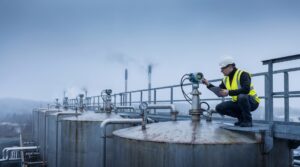
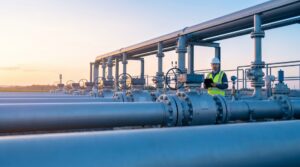
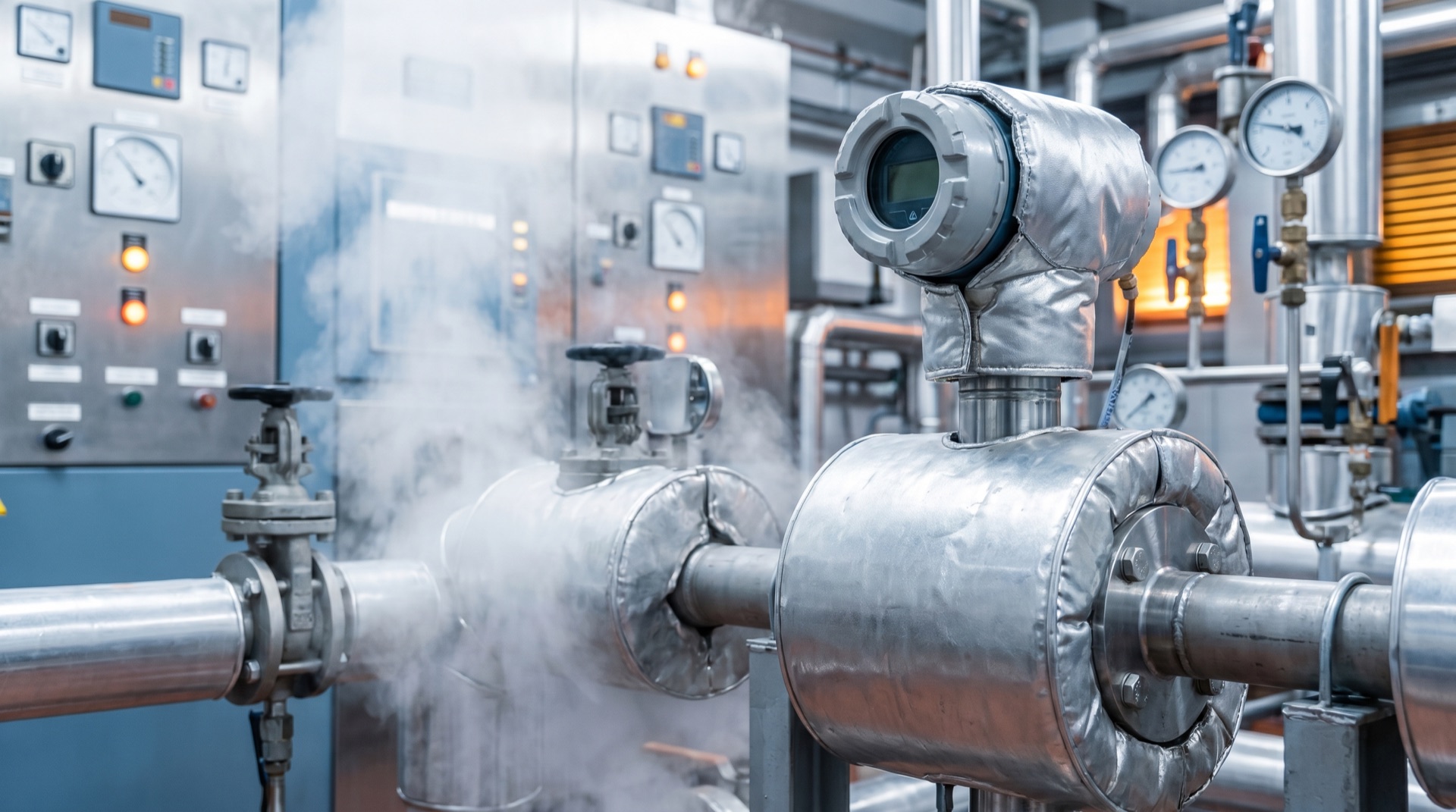
Accurate steam flow measurement is one of the most demanding tasks in process instrumentation. Steam and process gases are compressible, hot, and constantly changing in density, which means a meter that performs flawlessly on water can fail badly on a boiler header. Power stations and petrochemical complexes across Quebec and the rest of Canada typically turn to two proven technologies for these services: vortex shedding flowmeters and differential pressure (DP) cone meters. This guide explains how each technology works, why pressure and temperature compensation matters so much, and how turndown should drive selection. It is part of our guide to industrial flow measurement and custody transfer, which compares every major flow technology in one place.
Why Steam Flow Measurement Is So Demanding
Unlike liquids, steam and gas change density dramatically with operating pressure and temperature. A volumetric flow reading on its own tells you very little about how much energy or mass is actually moving through the pipe. Add high temperatures, condensate slugs at start-up, pipe vibration, and the risk of two-phase flow in poorly trapped lines, and it is clear why steam metering deserves careful engineering rather than a catalogue pick.
Steam is often the single largest energy carrier in a plant, and metering errors flow directly into boiler efficiency calculations, departmental cost allocation, and energy management reporting. Choosing the right meter from a complete flow measurement instrumentation portfolio, and then compensating it correctly, is what separates a credible steam balance from a guess.
Vortex Flow Meters: The Workhorse for Steam Service
A vortex flow meter places a bluff body across the pipe bore. As steam or gas flows past it, alternating vortices shed from each side of the obstruction, and the frequency of that vortex shedding is proportional to flow velocity. Because the measurement is based on frequency rather than signal amplitude, vortex meters are inherently linear over their working range and have no moving parts to wear out, a real advantage in hot steam service.
Vortex technology is widely regarded as the default choice for saturated and superheated steam lines, boiler feed monitoring, and compressed air or nitrogen distribution. CTH Industrial Controls supplies vortex flowmeters from manufacturers such as Foxboro, whose vortex instruments have a long track record in Canadian power and petrochemical plants.
Strengths of vortex meters on steam and gas
- No moving parts, so mechanical wear and drift are minimal even in high-temperature service.
- Frequency-based output that stays linear across the usable flow range.
- Suitable for saturated steam, superheated steam, gases, and clean low-viscosity liquids with the same basic technology.
- Available with integrated temperature sensing and multivariable options for compensated mass flow output.
Limitations to plan around
Vortex meters stop producing a usable signal below a minimum velocity, because vortex shedding becomes weak and irregular at low Reynolds numbers. This low-flow cutoff defines the bottom of the turndown range and must be checked against your minimum operating case as well as the design case. Vortex sensors can also respond to strong pipe vibration, and adequate straight pipe runs upstream and downstream are needed for a stable velocity profile.
DP Cone Meters for Gas Flow Measurement
The DP cone meter approaches the problem differently. A cone-shaped element suspended in the centre of the pipe forces the flow around its perimeter, creating a differential pressure between an upstream tap and a tap at the rear of the cone. Flow rate is calculated from that differential pressure using the familiar square-root relationship that governs all DP flow elements.
What makes a DP cone meter for gas flow attractive is the way the cone conditions the velocity profile as the fluid passes around it. The element effectively flattens and stabilizes the profile, which is why cone meters typically tolerate much shorter straight-run requirements than orifice plates or vortex meters. In congested pipe racks or retrofit projects where straight pipe simply does not exist, this can be the deciding factor. Cone meters are also well suited to fuel gas, flare gas, and wet gas applications where some liquid entrainment is expected. CTH supplies DP and cone-style metering solutions from brands such as Cameron, alongside the pressure measurement transmitters needed to complete the loop.
Pressure and Temperature Compensation: Getting to True Mass Flow
Both vortex and DP cone meters fundamentally infer velocity or volumetric flow. For steam and gas, that is only half the job, because density at operating conditions is what converts a volumetric reading into the mass or energy figure your plant actually cares about. Without compensation, a meter calibrated at design conditions will misreport whenever line pressure or temperature drifts, and in steam systems they drift constantly.
In practice, compensation is handled in one of three ways:
- Multivariable transmitters that measure differential pressure, static pressure, and temperature in a single device and compute compensated mass flow internally.
- Flow computers or DCS calculations that combine signals from the flow element, a pressure transmitter, and a temperature sensor, applying steam tables or a gas equation of state.
- Single-variable compensation for saturated steam, where pressure and temperature are thermodynamically linked, so one measured variable can infer density, provided the steam truly stays saturated.
Superheated steam always requires both pressure and temperature inputs, since the two variables move independently. Reliable temperature sensing in these services is its own discipline; our guide to extreme temperature measurement with ruggedized thermocouples covers sensor selection for hot processes. Where compensated flow totals feed energy reporting or regulatory submissions, pairing the meter with proper recording is equally important, as discussed in our article on process controllers and data recording for compliance.
Turndown: Matching the Meter to Your Real Operating Range
Turndown is the ratio between the highest and lowest flows a meter can measure within its stated accuracy. It is the specification most often glossed over, and the usual reason steam meters disappoint in service.
Vortex meters offer generous turndown at the top end but are bounded at the bottom by the low-flow cutoff described earlier. DP cone meters face a different constraint: because flow is proportional to the square root of differential pressure, a wide flow range compresses into a narrow DP signal at low rates. Stacked or high-rangeability DP transmitters extend the usable turndown considerably, but the square-root law still rules the physics.
The practical lesson is to size the meter for how the plant actually operates, including overnight and seasonal minimums, rather than matching the meter to the line size. A reduced-bore vortex installation or a carefully sized cone is almost always better than a full-line-size meter that spends half its life below cutoff.
| Criterion | Vortex Flow Meter | DP Cone Meter |
|---|---|---|
| Measuring principle | Vortex shedding frequency from a bluff body | Differential pressure across a central cone |
| Typical services | Saturated and superheated steam, compressed air, clean gases | Fuel gas, flare gas, wet gas, congested piping retrofits |
| Low-flow behaviour | Hard cutoff below minimum velocity | Signal compresses with square-root law; rangeable transmitters help |
| Straight-run needs | Moderate upstream and downstream runs | Typically short, thanks to flow conditioning by the cone |
| Moving parts | None | None |
| Compensation | Pressure and temperature inputs or multivariable option | Multivariable transmitter or flow computer |
Selecting for Power and Petrochemical Applications
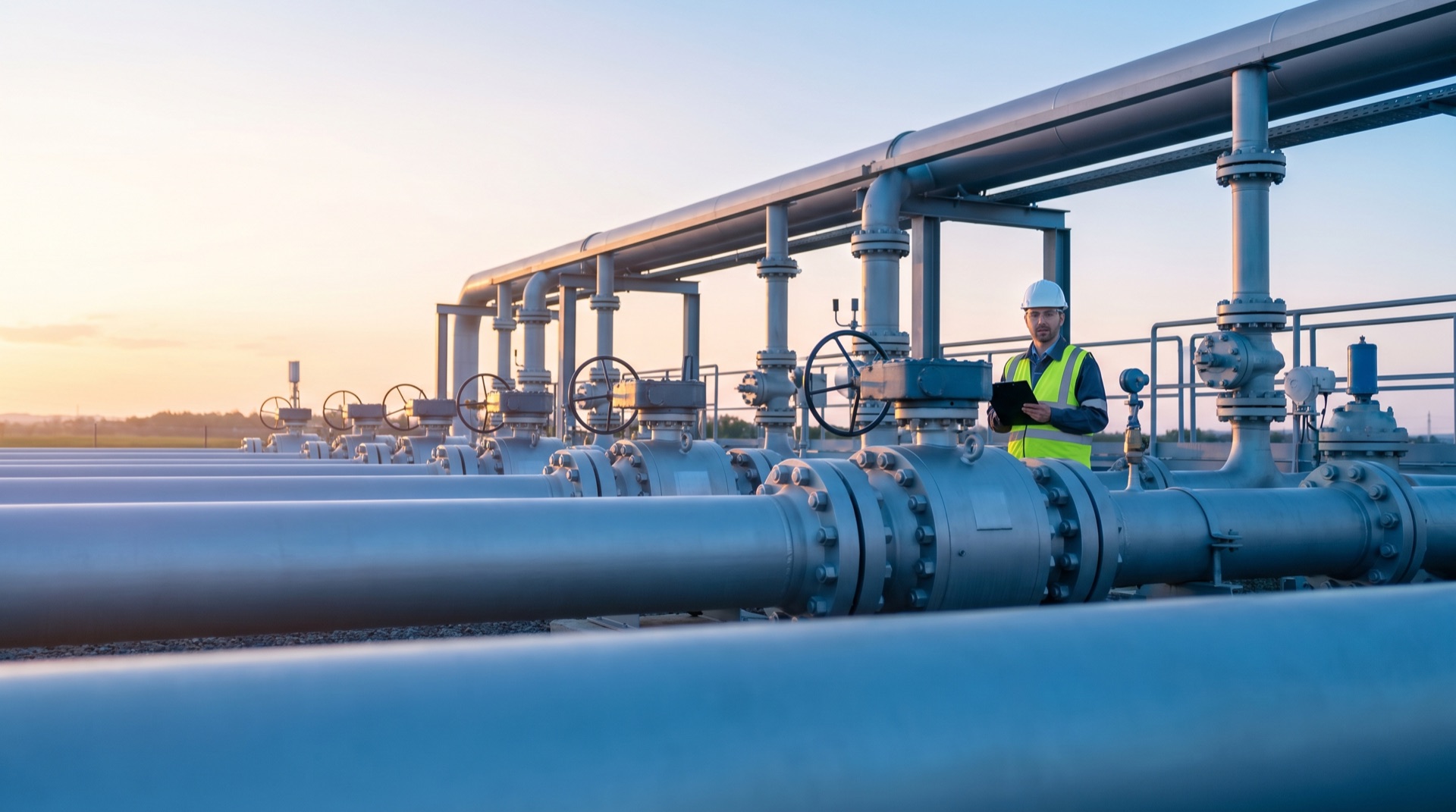
In power generation, vortex meters dominate boiler steam headers, auxiliary steam, and condensate return monitoring, while cone meters frequently appear on fuel gas supply to turbines and burners. In petrochemical plants, both technologies coexist: vortex for utility steam distribution across the site, cone meters for flare lines and hydrogen-rich streams where straight pipe is scarce. The same selection logic extends to the other heavy industries CTH serves across Quebec and the rest of Canada.
It also helps to know when neither technology is the right answer. For conductive liquids such as wastewater, a magnetic meter is usually superior, as explained in our magnetic flow meter selection guide. When direct mass measurement of liquids is critical, review our article on Coriolis mass flow measurement for chemical batching. And for large pipelines and fiscal gas metering, ultrasonic flow meters for pipelines and custody transfer deserve a close look. Where any gas measurement is used for billing between parties in Canada, approval and verification requirements may apply under Measurement Canada; always confirm the current requirements with the authority before specifying a custody transfer installation.
Frequently Asked Questions
What is the best flow meter for saturated steam?
Vortex flowmeters are the most common choice for saturated steam because they have no moving parts, tolerate high temperatures, and deliver a linear frequency output. Because pressure and temperature are linked in saturated steam, density compensation can often be achieved with a single pressure or temperature input, simplifying the installation.
Do vortex flow meters need pressure and temperature compensation on steam?
Yes, if you want mass or energy flow rather than raw volumetric flow. Saturated steam can be compensated from one measured variable, while superheated steam requires both pressure and temperature inputs, either through a multivariable meter or an external flow computer.
How much straight pipe does a DP cone meter need compared to a vortex meter?
Cone meters generally require significantly less straight run because the cone itself conditions the velocity profile as flow passes around it. Exact requirements depend on the upstream disturbance and the manufacturer’s installation guidance, so confirm them for your specific piping arrangement.
What limits the turndown of steam and gas flow meters?
For vortex meters, the limit is the minimum velocity below which vortex shedding becomes too weak to detect. For DP cone meters, the square-root relationship between flow and differential pressure compresses the signal at low rates. In both cases, sizing the meter for the real minimum operating flow, not the line size, is the key to usable turndown.
Can DP cone meters be used for custody transfer of natural gas in Canada?
Cone meters are used in fiscal and allocation metering, but any meter used for billing in Canada may be subject to approval and verification requirements administered by Measurement Canada. Verify current requirements with the authority before committing to a design.
Steam and gas metering decisions rarely happen in isolation. They sit alongside choices about magnetic, Coriolis, and ultrasonic technologies covered in our pillar resource on industrial flow measurement and custody transfer, which is the best place to compare all of the options side by side before finalizing a specification.
Request an Application Engineering Consultation
Every steam and gas metering point has its own combination of pressure, temperature, turndown, and piping constraints, and the right answer depends on the details. The CTH Industrial Controls team works with engineers across Quebec and Canada to match vortex and DP cone technologies from the manufacturers we represent, including Foxboro and Cameron, to real plant conditions. Request an application engineering consultation and we will help you specify, compensate, and commission a steam or gas flow measurement solution you can trust.