



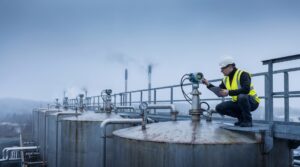
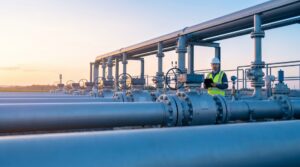
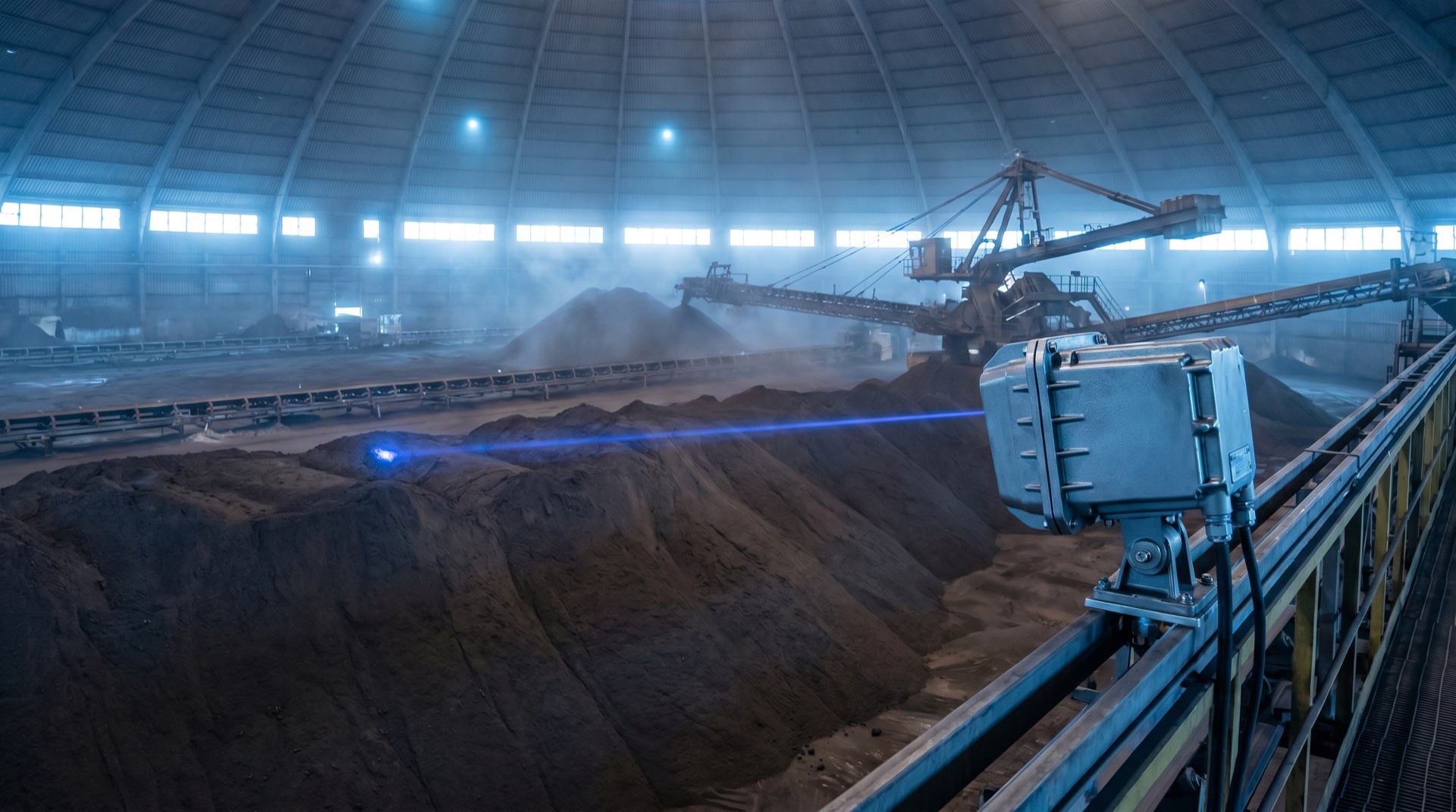
Heavy industry pushes measurement instrumentation hard. Conveyor transfer towers thick with airborne dust, stacker-reclaimers and bulk-handling machines running through Quebec winters, and rail-mounted equipment sharing tracks around crushers and stockyards all demand position data that is accurate, repeatable and available around the clock. A ruggedized laser distance sensor, or a radar sensor where dust and fog are severe, delivers exactly that: precise, non-contact distance measurement for material handling, positioning and collision avoidance across mining, bulk handling, ports and heavy manufacturing, even in conditions that defeat mechanical and encoder-based approaches.
This article is part of our pillar guide to instrumentation for hazardous areas and extreme environments. Below, we explain how laser distance measurement works, why target reflectivity defines usable range, where laser sensors fit across Canadian mining and metallurgical applications, and how to mitigate the dust that is the technology’s natural enemy.
Why Mining Needs a Ruggedized Laser Distance Sensor
Distance measurement in mining is rarely about a single static target. Positioning a tripper car along a conveyor gallery, tracking a travelling stacker along its rail, or stopping a reclaimer before it strikes a neighbouring machine are dynamic tasks that call for long range, fast measurement updates and high accuracy, all without touching the target.
Laser distance sensors meet these requirements by emitting a focused beam of light and calculating distance from the reflected signal, typically using phase-shift or time-of-flight techniques. Compared with mechanical, ultrasonic or draw-wire alternatives, they offer decisive advantages for mining and metallurgy:
- Non-contact measurement: nothing wears against moving ore, machinery or cables, which keeps maintenance demands low.
- Long range with a small spot size: a tightly collimated beam can target a specific structure, machine or bunker wall at distance without picking up nearby objects.
- High accuracy and repeatability: suitable for positioning tasks where fine resolution matters, such as equipment alignment and automated machine control.
- Fast response: rapid measurement updates support moving equipment and real-time collision avoidance logic.
Specialist manufacturers have built product families specifically for these conditions. CTH Industrial Controls supplies Dimetix laser distance sensors for long-range precision positioning, alongside Astech distance and speed measurement sensors for demanding metallurgical and bulk-material applications.
Range vs. Reflectivity: The Trade-Off That Defines Every Application
The single most important concept when specifying a laser distance sensor is the relationship between measuring range and target reflectivity. The sensor measures light that bounces back from the target, so a bright, diffusely reflective surface returns far more signal than a dark, light-absorbing one. The same instrument that measures a long distance to a pale concrete wall may achieve only a fraction of that range against wet, dark ore or coal.
| Target Condition | Effect on Usable Range | Practical Mitigation |
|---|---|---|
| Light-coloured, diffuse surface (concrete, painted steel) | Longest natural-target range | Often none required; confirm against the manufacturer’s datasheet conditions |
| Dark, wet or dusty ore and coal | Significantly reduced range | Select a sensor with stronger optical performance or shorten the measuring path |
| Reflective target plate mounted on the machine or structure | Substantially extended range | Standard practice for machine positioning and collision avoidance |
| Airborne dust, fog or steam in the beam path | Signal attenuation and potential false readings | Air purge, protective housings, optimized mounting, signal filtering |
| Steep measurement angle to the target | Weaker return signal | Mount as close to perpendicular as the installation allows |
In practice, range specifications must always be read in context: range to a natural target, range to a reflective plate and performance under realistic atmospheric conditions are three different numbers. Reviewing the application with actual target materials and dust levels in mind prevents most field disappointments.
Core Mining Applications for Laser Distance Measurement
Stockpile Positioning and Stacker-Reclaimer Control
Travelling stackers and reclaimers need to know precisely where they sit along the rail and where the boom is relative to the pile. Laser distance sensors provide long-travel rail positioning, while additional units monitor pile proximity for anti-collision and inventory purposes, enabling automated stacking patterns that improve blending and reduce segregation.
Material Handling: Cranes, Tripper Cars and Conveyor Galleries
In ship loaders, ore bridges, gantry cranes and tripper cars, a laser distance sensor aimed at a reflective plate gives continuous position feedback over long travel distances without the maintenance burden of encoders, racks or draw-wire systems exposed to dust and ice. The same approach positions transfer chutes and telescoping spouts during loadout.
Collision Avoidance for Rail-Mounted and Heavy Equipment
An industrial collision avoidance sensor based on laser ranging continuously measures the true gap between two machines, or between a machine and a fixed structure, and feeds slow-down and stop zones in the control system. Typical pairings include two stacker-reclaimers on a shared rail, cranes operating in a concentrate shed, and machinery approaching end-of-travel buffers. Because the laser measures real distance rather than inferring position from wheel rotation, it is immune to wheel slip on icy or dusty rails, a familiar problem in Canadian operations.
Hoist, Bin and Metallurgical Plant Monitoring
Laser distance measurement also supports hoist position verification, ore pass and bin monitoring, and the positioning of charging equipment in metallurgical plants. For continuous level measurement in dusty silos and vessels, compare laser against the radar techniques covered in our guide to non-contact level measurement with radar and ultrasonic sensors.
Dust Mitigation: Keeping Optics Working in Real Mine Conditions
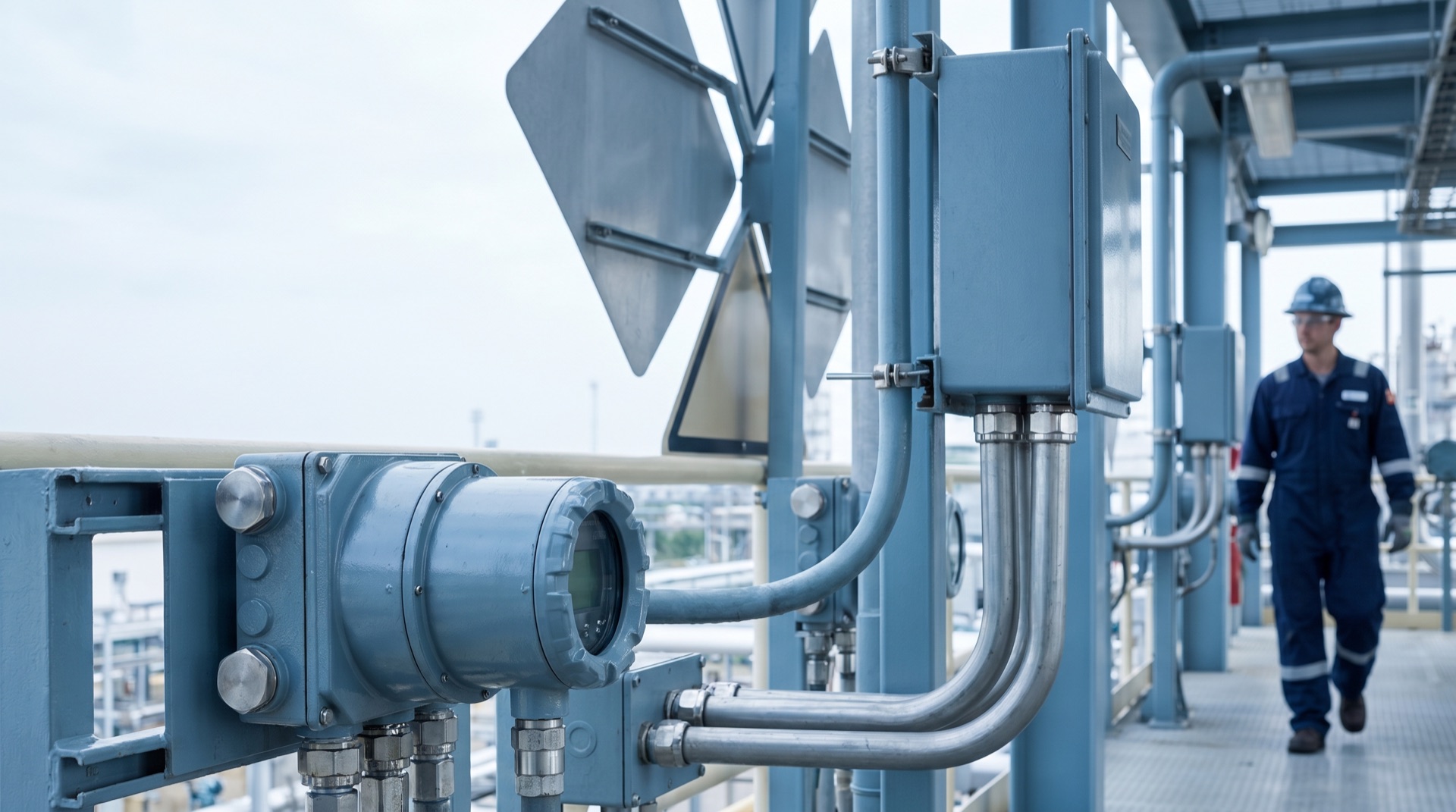
Dust is the defining challenge for optical measurement in mining. It attacks performance in two ways: airborne particles scatter the beam and attenuate the return signal, while settled dust on the lens degrades the optics over time. Proven mitigation strategies include:
- Air purge and blower attachments: a continuous flow of clean air across the optical window prevents dust accumulation and is the first line of defence in transfer towers and crusher houses.
- Protective and heated housings: enclosures shield the sensor from impact, washdown and snow, while heating prevents condensation and ice on the window through Quebec and northern Canadian winters.
- Thoughtful mounting: placing the sensor outside the densest dust plume, measuring across rather than through falling material, and protecting the line of sight with simple baffles dramatically improves signal quality.
- Signal processing and filtering: sensors designed for harsh duty can distinguish a solid target from intermittent dust clouds; averaging and plausibility settings should be configured to match the application dynamics.
- Scheduled lens inspection: a quick check during routine rounds costs minutes and avoids gradual signal loss.
Where dust or steam loading is so severe that no optical technology is dependable, microwave-based distance and speed sensors, such as those in the Astech portfolio, are the logical alternative. Many sites combine both: lasers where precision is paramount, radar where the atmosphere is worst.
Selecting and Integrating a Laser Distance Sensor
Once the measurement task is defined, selection comes down to matching the sensor and its accessories to the installation:
- Range with margin: specify against the real target reflectivity, not the headline number, and add margin for dust, rain and snow.
- Accuracy and update rate: positioning loops on moving machinery need fast, repeatable measurements; inventory and monitoring tasks can tolerate slower averaged readings.
- Interfaces: analog outputs, serial communication and industrial fieldbus options determine how cleanly the sensor integrates with PLCs and drives. For far-flung assets, see our guide to wireless communication on mining and petrochemical sites.
- Environmental protection: ingress protection, heated housings and air purge accessories should be specified together with the sensor, not as an afterthought.
- Hazardous locations: where flammable gases or combustible dusts may be present, the sensor and its installation must respect the applicable area classification under the Canadian Electrical Code and CSA requirements. Our guide to hazardous area classifications, zones and divisions explains the framework; always verify certification requirements with the authority having jurisdiction.
- Temperature extremes: from arctic cold to radiant heat near furnaces in metallurgical plants, ambient conditions drive enclosure and heating choices. Related techniques are covered in our article on extreme temperature measurement with infrared sensors and ruggedized thermocouples.
CTH Industrial Controls supports mining and metallurgy operations across Quebec and Canada with application engineering for distance, level, flow and condition monitoring. For the equipment reliability side of that picture, see our complete guide to predictive maintenance and process automation.
Laser Distance Sensors for OEMs and Machine Builders
The same qualities that make laser distance measurement dependable in mining, long range, non-contact operation and tolerance of harsh surroundings, make it a natural fit for original equipment manufacturers. Crane builders, material handling integrators and automation specialists design Dimetix laser distance sensors into positioning systems, collision avoidance packages and automated storage equipment, while Astech radar sensors cover duties where dust or fog would defeat an optical measurement. For OEM programs, CTH provides application engineering during the design phase, consistent specifications across production quantities and support for the sensing portion of certification documentation. Speak with our team early in the design cycle to settle range, target and environmental requirements before they become constraints.
Frequently Asked Questions
How far can a laser distance sensor measure in a mining application?
Usable range depends primarily on target reflectivity and atmospheric conditions. Bright, diffuse surfaces allow long measuring distances, while dark, wet ore reduces range considerably. Mounting a reflective target plate on the machine being tracked extends range substantially and is standard practice for positioning and collision avoidance. Always confirm performance against the manufacturer’s datasheet conditions for your specific targets.
Do laser distance sensors work on dark or wet ore and coal?
Yes, but with reduced range, because dark and wet surfaces absorb much of the emitted light. Successful applications on low-reflectivity material use sensors with strong optical performance, shorter measuring paths, favourable mounting angles and signal averaging. An application review with representative samples is the safest way to validate feasibility.
How do you protect a laser distance sensor from dust in a mine?
The most effective measures are an air purge flowing clean air across the lens, a protective housing, mounting outside the densest dust plume, and signal filtering that rejects transient dust clouds. Combined with periodic lens inspection, these measures keep optical sensors dependable in transfer towers, crusher houses and stockyards.
What is the best collision avoidance sensor for industrial mining equipment?
For rail-mounted machines such as stacker-reclaimers and gantry cranes, a laser distance sensor measuring to a reflective plate on the opposing machine is a proven solution: it reports true separation distance, unaffected by wheel slip, and feeds staged slow-down and stop zones in the control system. In extreme dust or steam, radar-based distance sensors are a robust alternative.
Can laser distance sensors operate through Canadian winter conditions?
With appropriate accessories, yes. Heated protective housings and window heating prevent condensation, frost and ice buildup, while careful mounting limits exposure to blowing snow. Verify the rated operating temperature range with the manufacturer and specify the cold-weather package at purchase rather than retrofitting after the first winter outage.
Precision distance measurement is one building block of a dependable strategy for harsh-duty instrumentation. To see how it fits alongside protection methods, temperature measurement and personnel safety, return to our pillar guide on hazardous area and extreme environment instrumentation, and review our related article on industrial gas detection for confined spaces.
Request an Application Engineering Consultation
Choosing between laser and radar, sizing range against real-world reflectivity, and specifying the right dust and cold-weather accessories are decisions best made with application data in hand. The CTH Industrial Controls team works with mining and metallurgical operations across Quebec and Canada to match measurement challenges with proven instruments from the manufacturers we represent, including Dimetix and Astech. Request an application engineering consultation and tell us about your positioning, stockpile or collision avoidance challenge; we will help you specify a solution that survives the site.